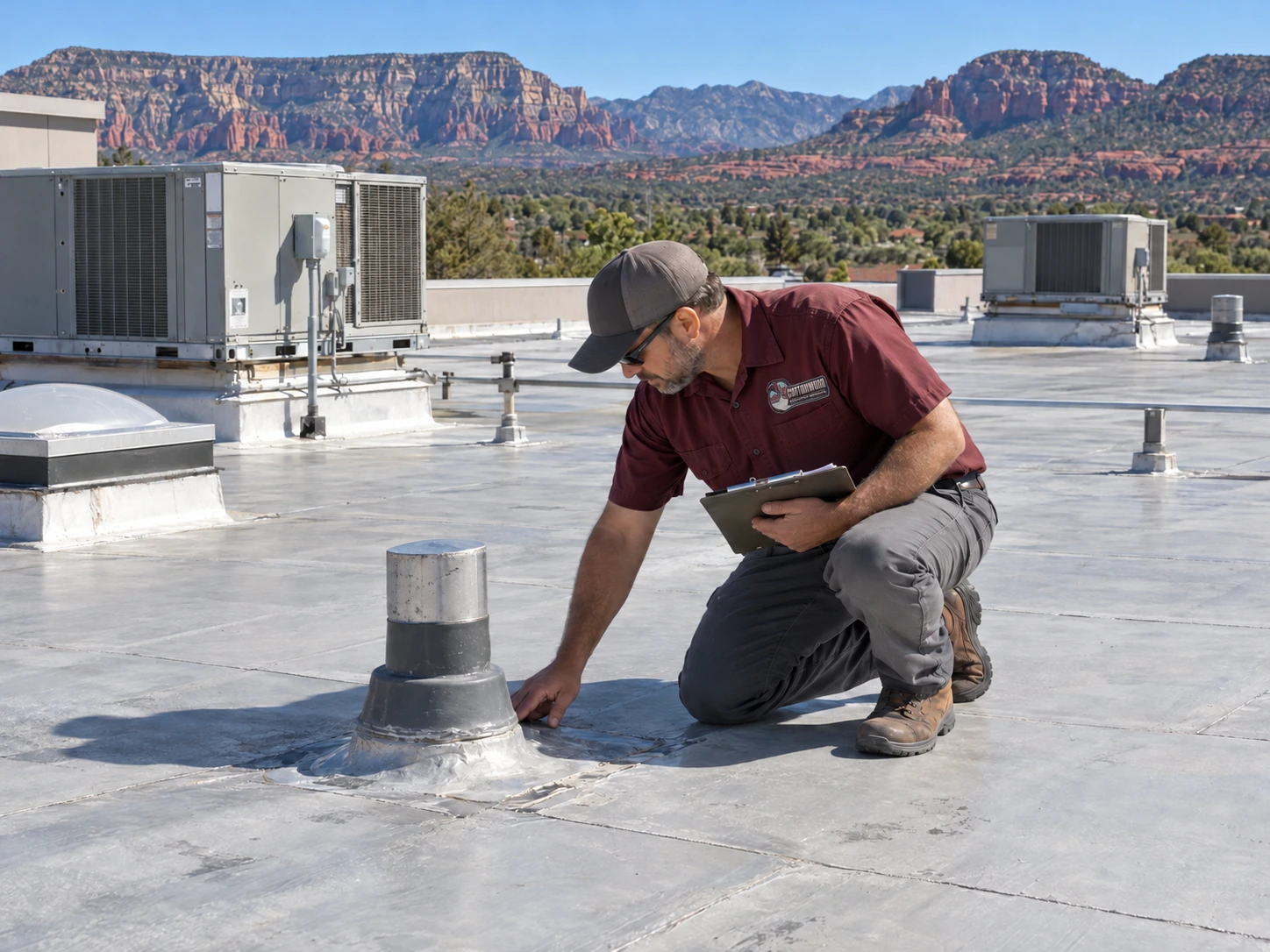
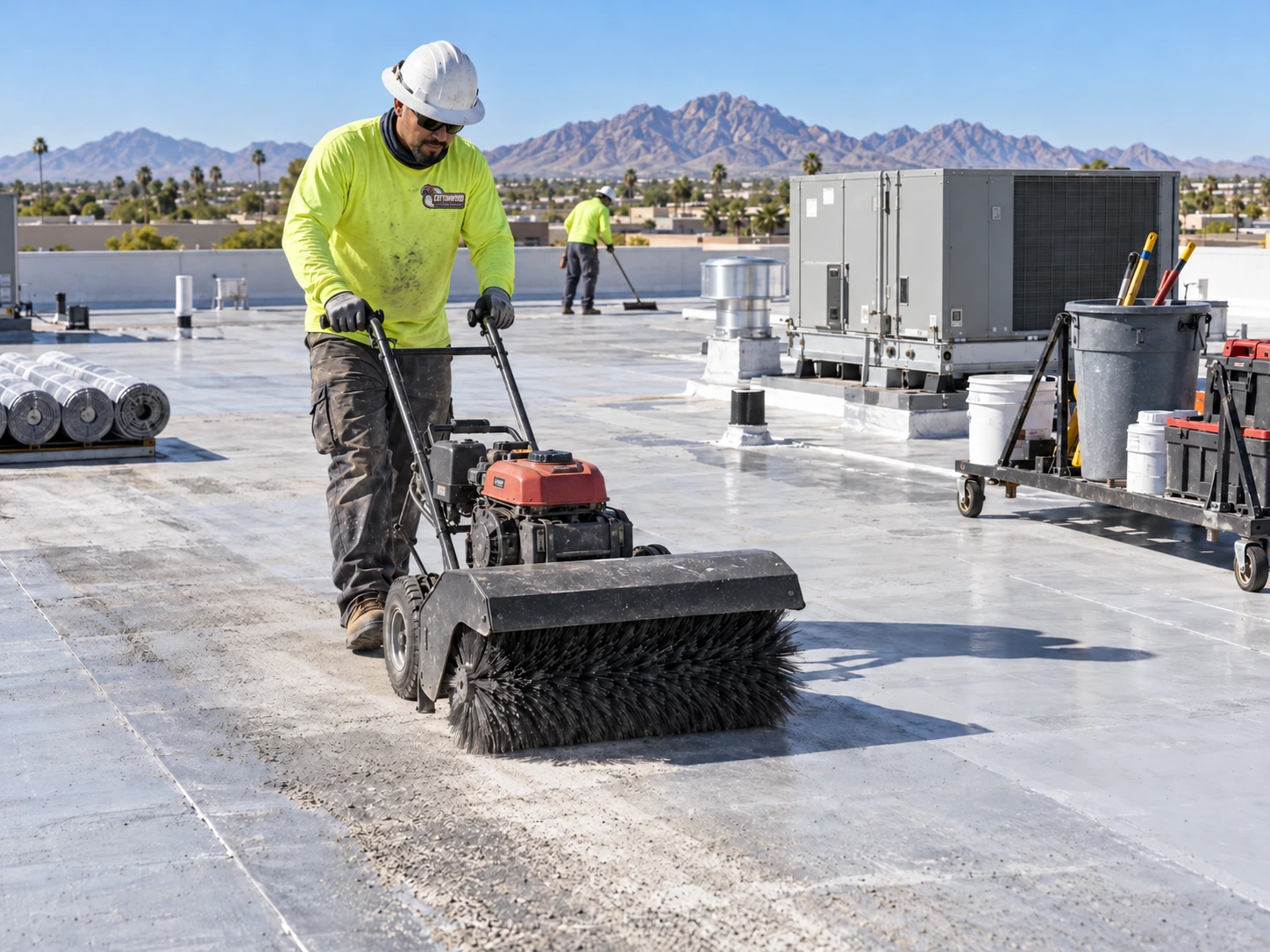
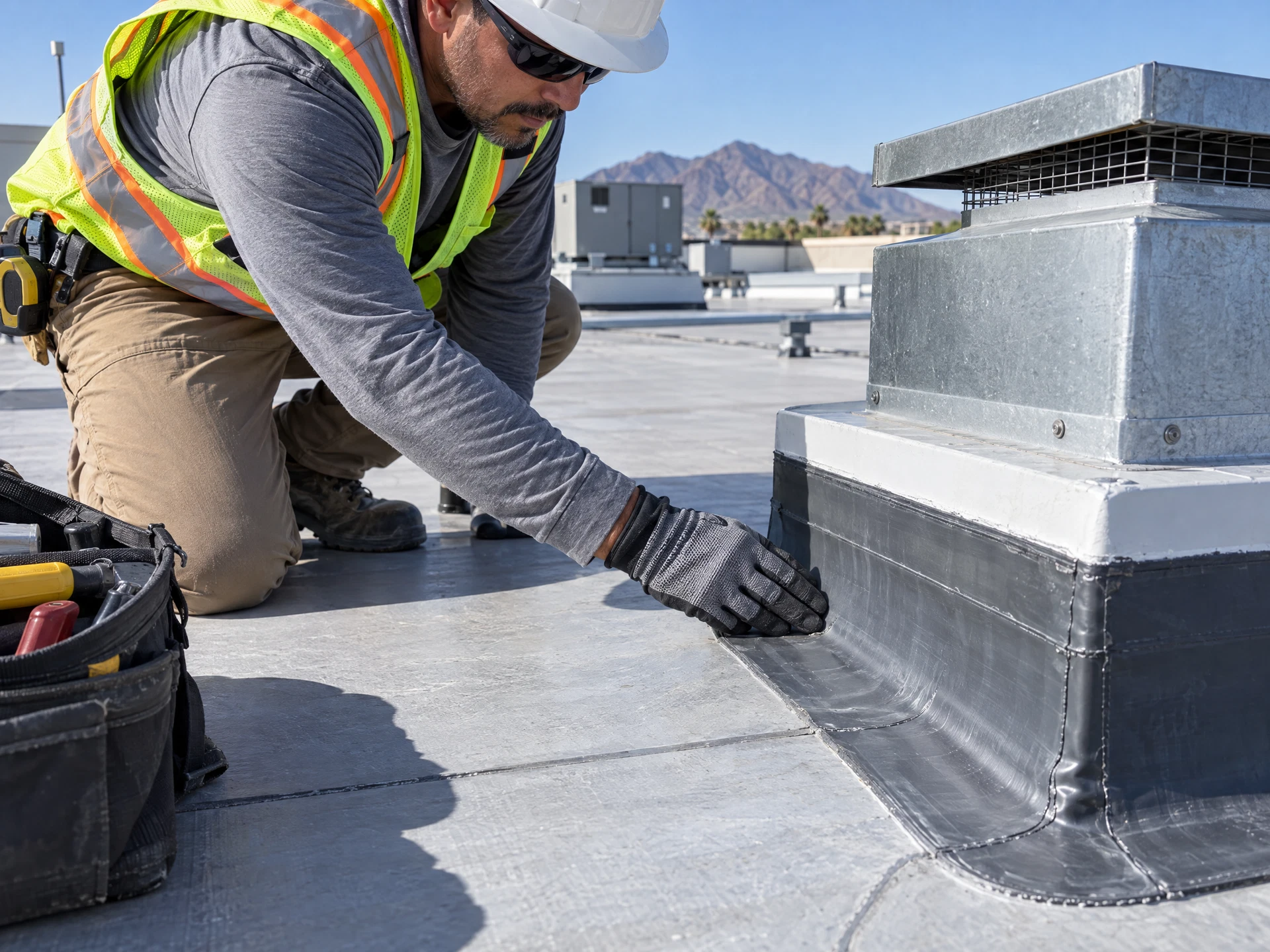
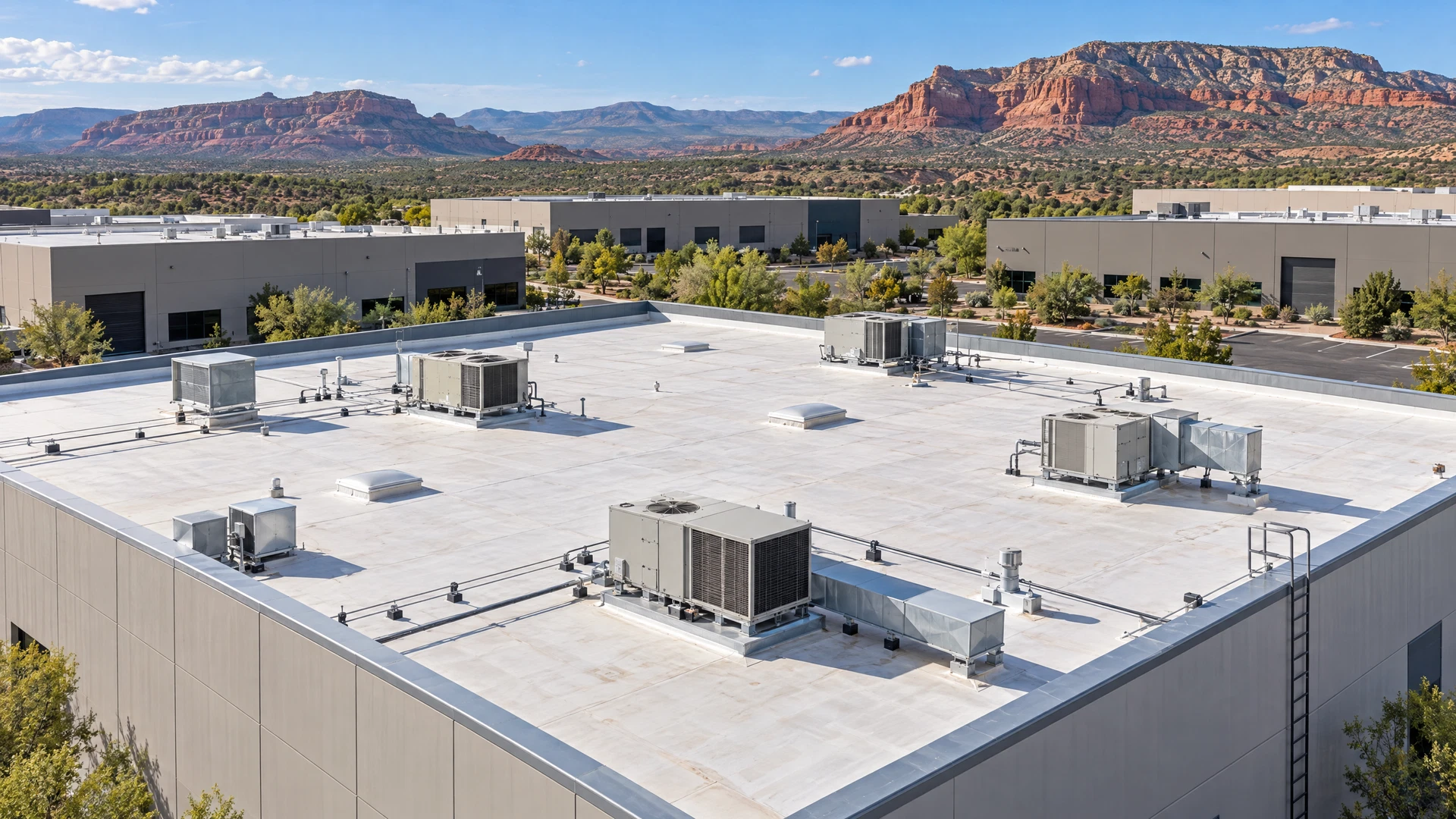
In Rimrock, the options review should produce a roof-area register rather than one blanket recommendation. During inspection, identify each field section and tie it to its observed roof material and details: coating-ready candidate, repair-before-coating, replacement candidate, or investigation hold. A metal section with corroded panels, loose fasteners, open seams, panel movement, drainage concerns, or a finish-compatibility question stays in the repair or investigation column until those issues and adhesion are assessed. A coating allowance cannot stand in for a structural or water-intrusion defect.
For Rimrock low-slope sections that remain in coating-ready review, silicone or acrylic is a system-specific choice supported by documented moisture status, drying, completed repairs, substrate condition, compatibility, and preparation. A silicone review should flag ponding and moisture investigation; it cannot be presented as correcting drainage, continuous immersion, or active leaks. An acrylic review should record asphaltic bleed-through, detail work, and the weather window, without promising ponding correction. The condition map should name the proposed system, preparation owner, unresolved findings, and any application-window effect on sequence.
Other Rimrock areas need their own scope instead of being forced into a coating category. A spray foam candidate requires a clean, dry, secure prepared substrate, primer when the system calls for it, controlled application conditions, and overspray and HVAC protection, so access and protection tasks belong on the area record. Installed asphalt shingles require written manufacturer compatibility and applicable code checks before field-applied treatment; repair or replacement may be more appropriate. When evidence is incomplete, mark the section for investigation and record what must be confirmed before the owner or facility manager assigns funds, access, and sequence.