A defined restoration boundary
Inspection and moisture findings help distinguish coating-ready surfaces from wet, damaged, or otherwise unsuitable areas. That gives the roof plan a defined scope before materials are placed.

Commercial Roof System
Restore a Low-Slope Roof With a Silicone Coating Plan. Silicone roof coating can be part of a practical restoration plan when the existing low-slope roof is repairable, dry, and compatible with the selected system. Cottonwood Roof Coating starts with moisture and ponding investigation, then matches preparation, primer, application, and post-application maintenance to the roof in front of us.
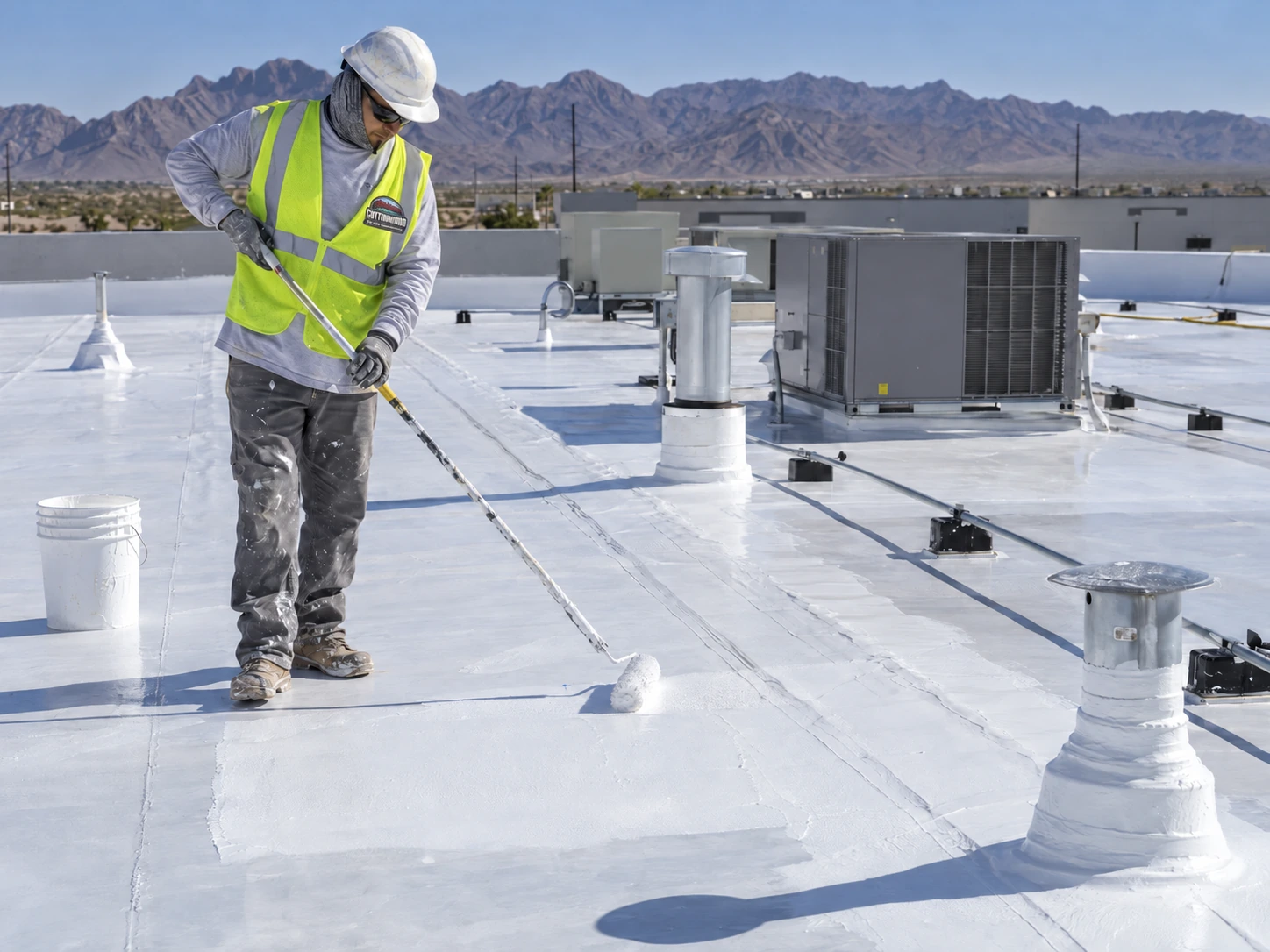
A low-slope roof can look like a coating candidate from the ground while concealed moisture, wet insulation, failed seams, or recurring ponding change the scope. We inspect the roof assembly before discussing silicone. That review helps separate areas that may be restored from areas that need repair or a different roof decision.
Ponding water deserves its own investigation. Coating does not correct drainage, and continuous immersion or active leaks require attention before a coating system is considered. We look at drains, scuppers, crickets, penetrations, seams, flashing transitions, and the places where water remains after weather passes. The findings guide repairs and define where a coating can responsibly be used.
Moisture testing helps identify where the roof is wet below the surface. Drying time matters because a coating system needs a properly prepared substrate. We also review the existing roof material, surface condition, previous coatings, repairs, and details that can affect adhesion. Product-specific adhesion testing and compatibility review inform whether primer is needed and which system belongs on the roof.
The goal is a clear restoration boundary. We document preparation needs, repair items, compatible materials, and areas that should remain outside the coating scope. Building owners and facility managers can then plan roof work around known conditions instead of treating every visible symptom as the same problem.
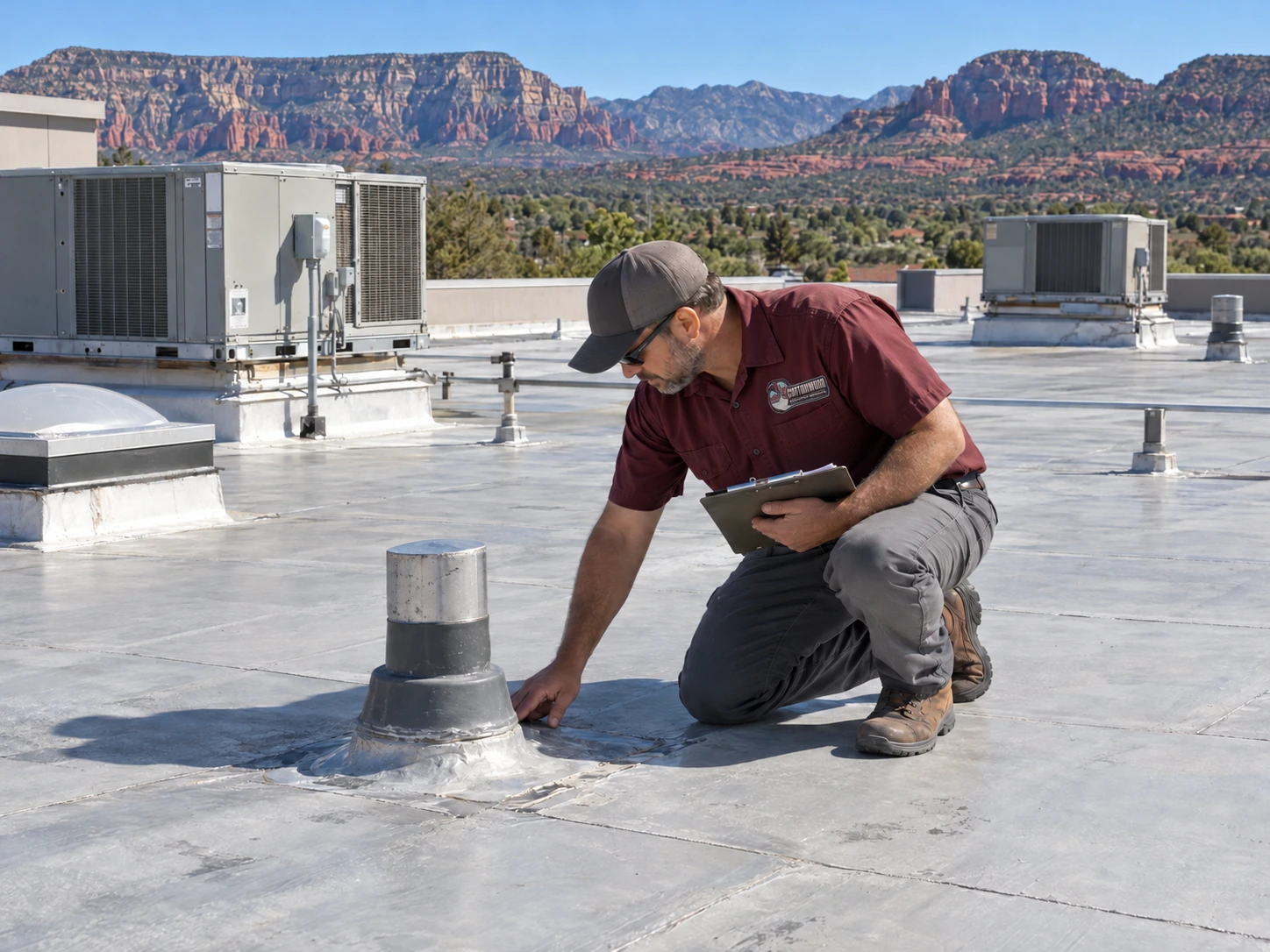
Inspection and moisture findings help distinguish coating-ready surfaces from wet, damaged, or otherwise unsuitable areas. That gives the roof plan a defined scope before materials are placed.
We examine where water collects and how it moves across the low-slope roof. Drainage concerns remain a repair and planning issue rather than being presented as something silicone will solve.
The existing substrate and any prior coating influence preparation and primer selection. Adhesion testing and product instructions help establish a system that can bond to the roof surface.
After application, roof care includes scheduled visual reviews, attention to drains and details, and prompt follow-up on damage or changes. Maintenance keeps small observations from disappearing between service visits.
A silicone roof coating system may be considered for a repairable low-slope roof after the surface is inspected, repaired where needed, cleaned, dried, and tested for adhesion. The existing assembly, prior coatings, and roof details determine whether the system is a reasonable fit. We do not treat the product name as a substitute for an inspection.
Primer and detail materials are selected around the substrate and the manufacturer's system requirements. A roof with aged materials, incompatible finishes, exposed repairs, or uncertain surface history needs a closer review before the coating sequence is set. Where the condition or moisture findings fall outside a coating approach, the next step may be repair or another roofing scope.
The application plan also accounts for drains, penetrations, seams, curbs, edge conditions, and areas that could be exposed to traffic or equipment. Silicone is not a drainage correction, a solution for continuous immersion, or a blanket answer for active leaks. Those conditions need to be addressed in the roof plan before coating work proceeds.
We review the low-slope assembly, visible damage, seams, flashings, penetrations, drains, scuppers, curbs, and previous repair or coating work. The inspection establishes the questions that moisture testing and preparation must answer.
Moisture testing helps locate areas that may be wet below the surface, while the roof review traces places where water collects or drains slowly. Wet materials, active leaks, and drainage concerns are recorded for separate action before coating is considered.
We identify repairs, cleaning requirements, drying needs, and surfaces that should be excluded. Substrate history and prior coatings are reviewed alongside product instructions. Adhesion testing helps determine whether the proposed coating can bond and whether a primer is required.
The roof is prepared according to the selected system, including repairs, cleaning, drying, detail work, and primer where specified. Application follows product requirements and site controls. We pay close attention to transitions and details that can interrupt a continuous coating field.
After application, we review the finished surface and the treated details, then set expectations for routine roof observations. Future checks should include drains, penetrations, seams, traffic areas, and changes that could affect the coating or the underlying roof.
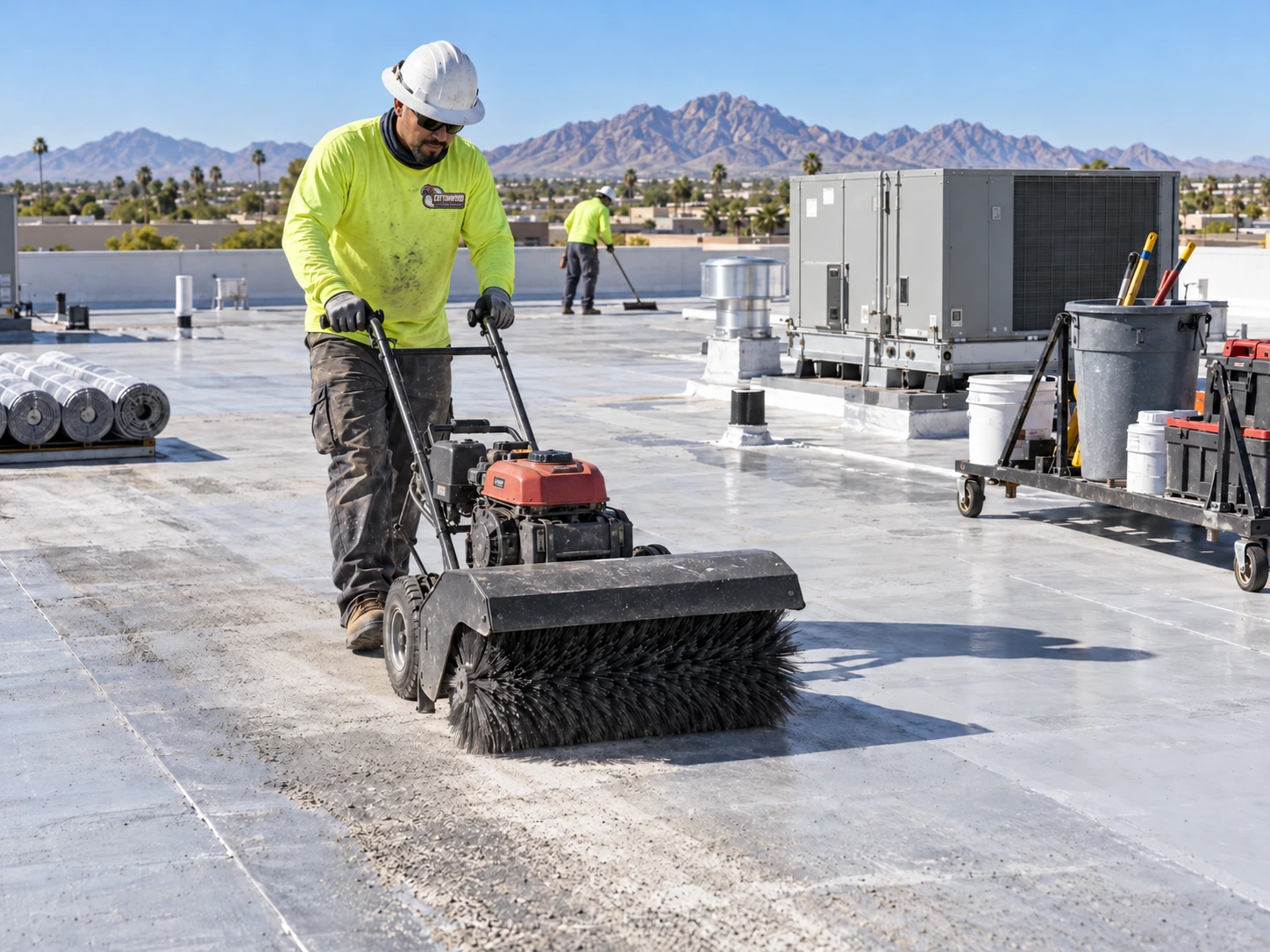
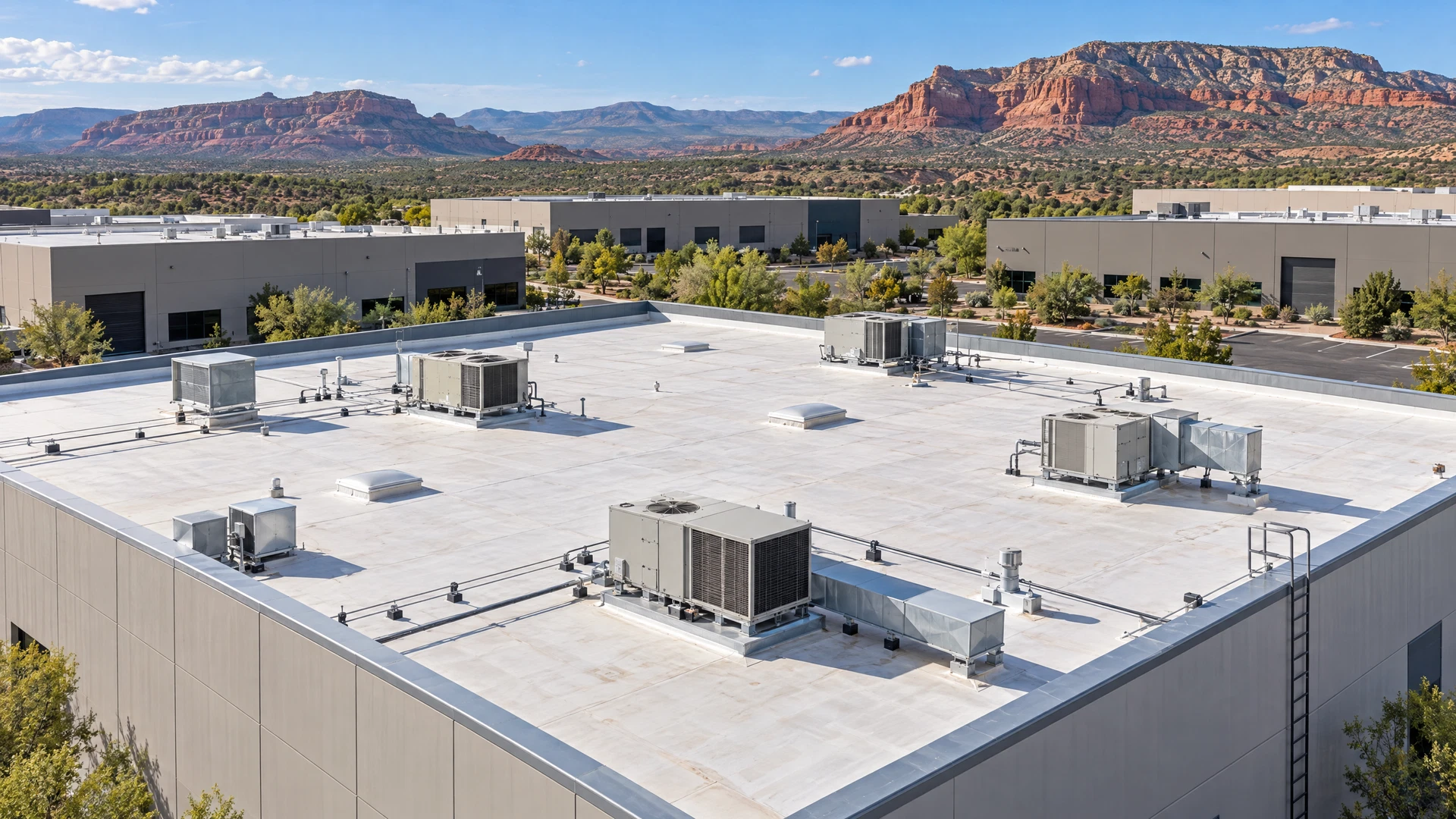
Roof coating work affects more than the roof surface. Facility managers should identify rooftop units, service paths, access points, occupied areas, and sensitive equipment before the work sequence is set. We use that information to discuss staging, protection, access, and the parts of the building that need coordination during preparation and application.
Weather and roof condition control the work window. The substrate must be suitable for the selected system, and surfaces may need time to dry after cleaning or repair. Building schedules should allow for inspection, preparation, application, and a review of the finished work rather than treating coating as a single short visit.
Maintenance planning begins when the coating plan is written. Keep records of repairs, coating areas, detail conditions, access limitations, and observations made after application. A recurring review can catch blocked drains, mechanical damage, worn traffic paths, or new moisture signs while the response is still defined and manageable.
Silicone may be considered for roofs where water resistance is an important concern, including roofs that occasionally experience ponding. The roof still needs proper drainage, though. A coating should not be used as an excuse to ignore clogged drains or low areas. Roof Coatings Manufacturers Association
No. Some silicone coatings can handle ponding water better than other products, but the underlying cause should still be investigated. Good drainage remains important for the roof as a whole. Roof Coatings Manufacturers Association
That depends on the existing assembly and its condition. A candidate roof should be evaluated for moisture, active leaks, drainage concerns, structural soundness, surface condition, previous coatings, and product compatibility. Silicone may be considered when the roof is repairable, properly prepared, dry, and able to pass the required compatibility and adhesion review.
Wet materials, active leaks, damaged seams or flashings, unresolved penetrations, and areas subject to continuous immersion need attention before a coating scope is set. Ponding also requires investigation because coating does not correct drainage. Some areas may need repair or another roofing approach instead of silicone.
Commercial Roof Planning
Silicone Roof Coating decisions for Cottonwood properties begin with low-slope restoration guided by moisture and ponding investigation, substrate and primer compatibility, and a maintenance plan after application. Use the estimate path for an initial planning range or call to discuss the roof directly.