Commercial Roof System

Cottonwood Acrylic Roof Coating

Plan Acrylic Roof Coating Around the Roof and the Weather. Acrylic coating work depends on a dry, clean, repaired, compatible roof and a weather window that allows the water-based material to dry as required. Cottonwood Roof Coating helps commercial property owners sort out roof fit, asphaltic bleed-through, detail preparation, recoating decisions, and building scheduling before application begins.

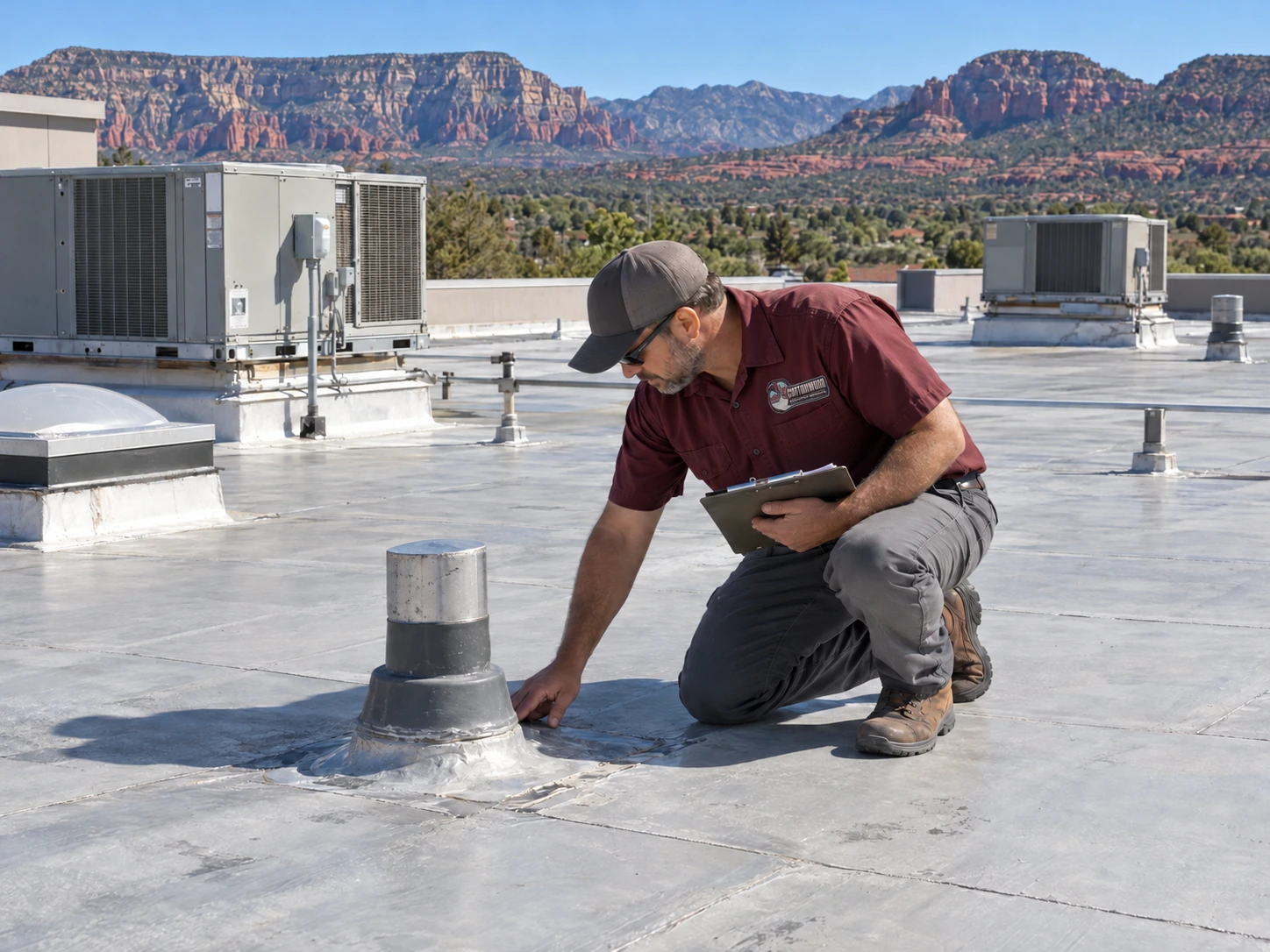
Commercial roof inspector reviewing prepared coating details near rooftop equipment

Acrylic Coating Starts With a Dry Roof Window

Acrylic roof coating can be a practical recovery option for a commercial roof that is structurally sound, dry, clean, repaired, and compatible with the selected system. The work depends on conditions above the roof deck and on the details around seams, penetrations, edges, drains, curbs, and equipment supports. Cottonwood Roof Coating reviews those conditions before recommending a coating scope.

Because the material is water-based, application timing matters. The roof needs a weather window that allows the surface and coating to dry according to product requirements. Damp substrate, dew, rain, or a short drying window can change when work should proceed. A clear calendar date is not a substitute for checking the roof and the forecast.

Asphaltic roof materials can release oils that discolor or weaken a coating film, commonly called bleed-through. Those areas may need cleaning, separation, reinforcement, or a compatible detail treatment before the field coating is applied. A uniform spray or roller pass does not replace detail work at seams, penetrations, transitions, and repairs.

Recoating is a decision about the existing assembly, not simply a choice of color or thickness. We look for sound surfaces, secure details, existing coating adhesion, moisture concerns, drainage conditions, and repairs that need to be completed first. If those conditions do not support a coating system, the scope should identify repair or replacement work instead.
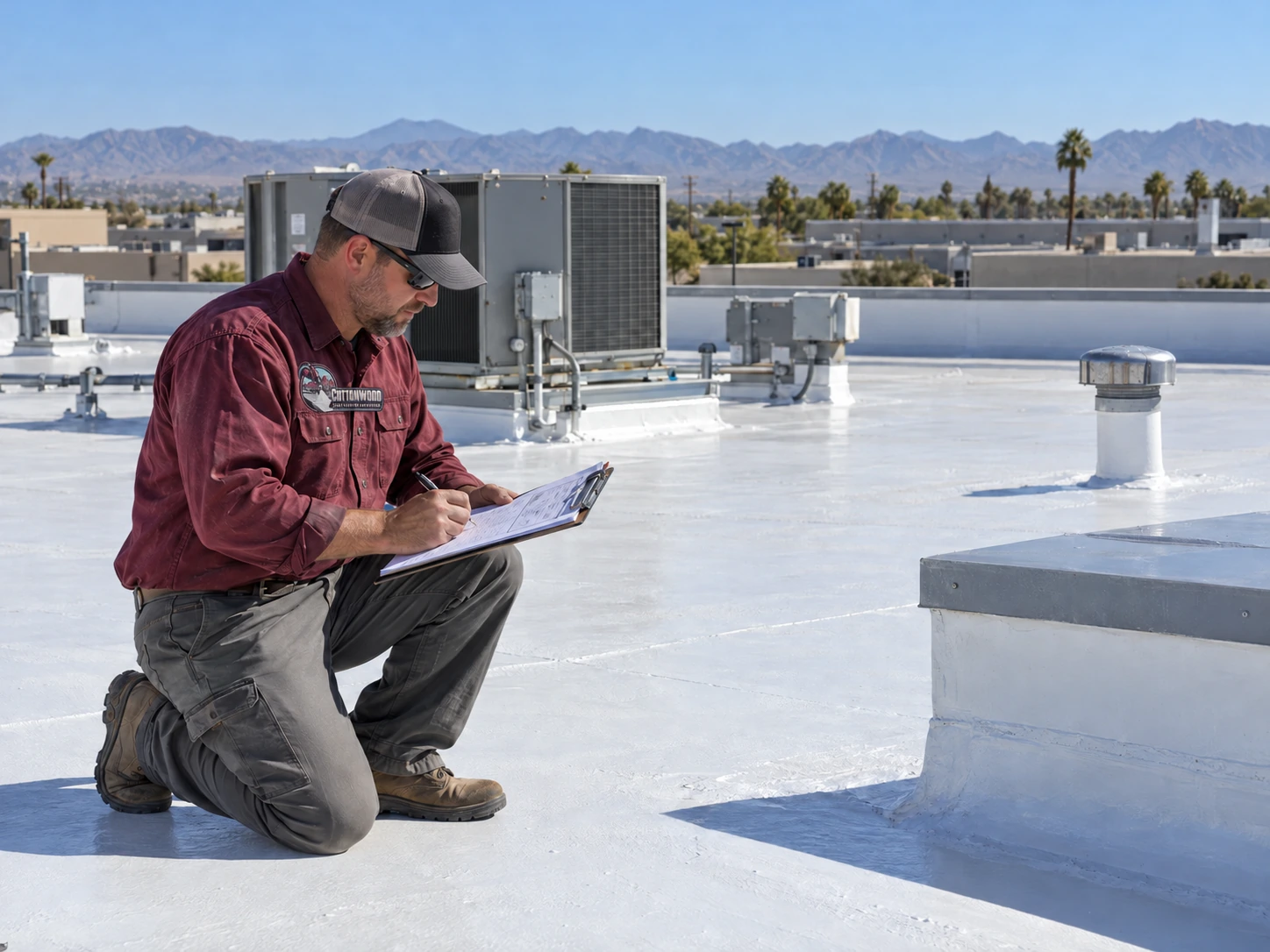
Inspector assessing commercial roof details before selecting a system

Benefits of Coating Your Roof

Weather-Based Application Planning

Acrylic work is scheduled around substrate dryness, forecast conditions, and the time needed for the coating to dry. That gives the building team a more useful application window than a date selected without a roof and weather review.

Detail Work Before Field Coating

Seams, penetrations, edges, transitions, and repairs receive attention before broad roof areas. Asphaltic bleed-through is identified early so the preparation plan can address discoloration and compatibility concerns at the source.

A Clear Recoat Decision

An existing roof is evaluated for soundness, adhesion, moisture concerns, and repair needs before a new coating is selected. Areas that are not coating-ready can be separated from areas that may support a compatible system.

A Scope That Fits Building Operations

Roof access, rooftop equipment, occupied areas, and the daily work window belong in the planning conversation. The result is a coating scope that can be reviewed alongside the building schedule and site responsibilities.

Commercial Roof Coating Options for Cottonwood

Acrylic over a compatible existing roof surface can be considered when the assembly is structurally sound and the surface is clean, dry, repaired, and ready for adhesion. Existing coating condition matters. Peeling, weak, contaminated, or moisture-affected areas need to be addressed before a new acrylic layer is specified.

Asphaltic roof systems require a closer look at bleed-through and detail transitions. The preparation plan may include cleaning, localized treatment, reinforcement, or a compatible separation step where the asphaltic material could affect the coating film. The selected products and methods must match the existing roof system and the manufacturer's requirements.

A recoat scope can also be limited to defined roof sections after inspection. That may be appropriate when conditions vary across the building or when repairs must be completed before broader coating work. Cottonwood Roof Coating can separate coating-ready areas from sections that need repair or a different roof decision.

What Happens Next?

  1. 01

    Inspect Your Roof

    We review the existing roof assembly, surface condition, seams, penetrations, edges, drains, curbs, equipment supports, and visible repair history. The inspection establishes whether the roof may support a coating discussion and where closer testing or repair review is needed.

  2. 02

    Verify Surface and Moisture Conditions

    The roof must be clean, dry, and suitable for the selected system. We look for moisture concerns, loose or failing material, weak adhesion, contamination, and drainage conditions that could affect preparation or the decision to recoat.

  3. 03

    Prepare Asphaltic Areas and Details

    We identify locations where asphaltic bleed-through may affect the coating and review the seams, penetrations, transitions, and repairs that need detail work. Preparation follows the compatible product system rather than treating every roof area the same way.

  4. 04

    Confirm the System and Weather Window

    The selected acrylic system must fit the existing substrate and prepared conditions. Application timing is then coordinated with the forecast, roof dryness, temperature requirements, and the time needed for each coat or detail to dry.

  5. 05

    Apply the Coating and Review the Scope

    After preparation is complete, the coating is applied to the defined areas using the selected method and product requirements. The finished scope should identify completed details, sections that remain outside the coating area, and maintenance items for the building team.

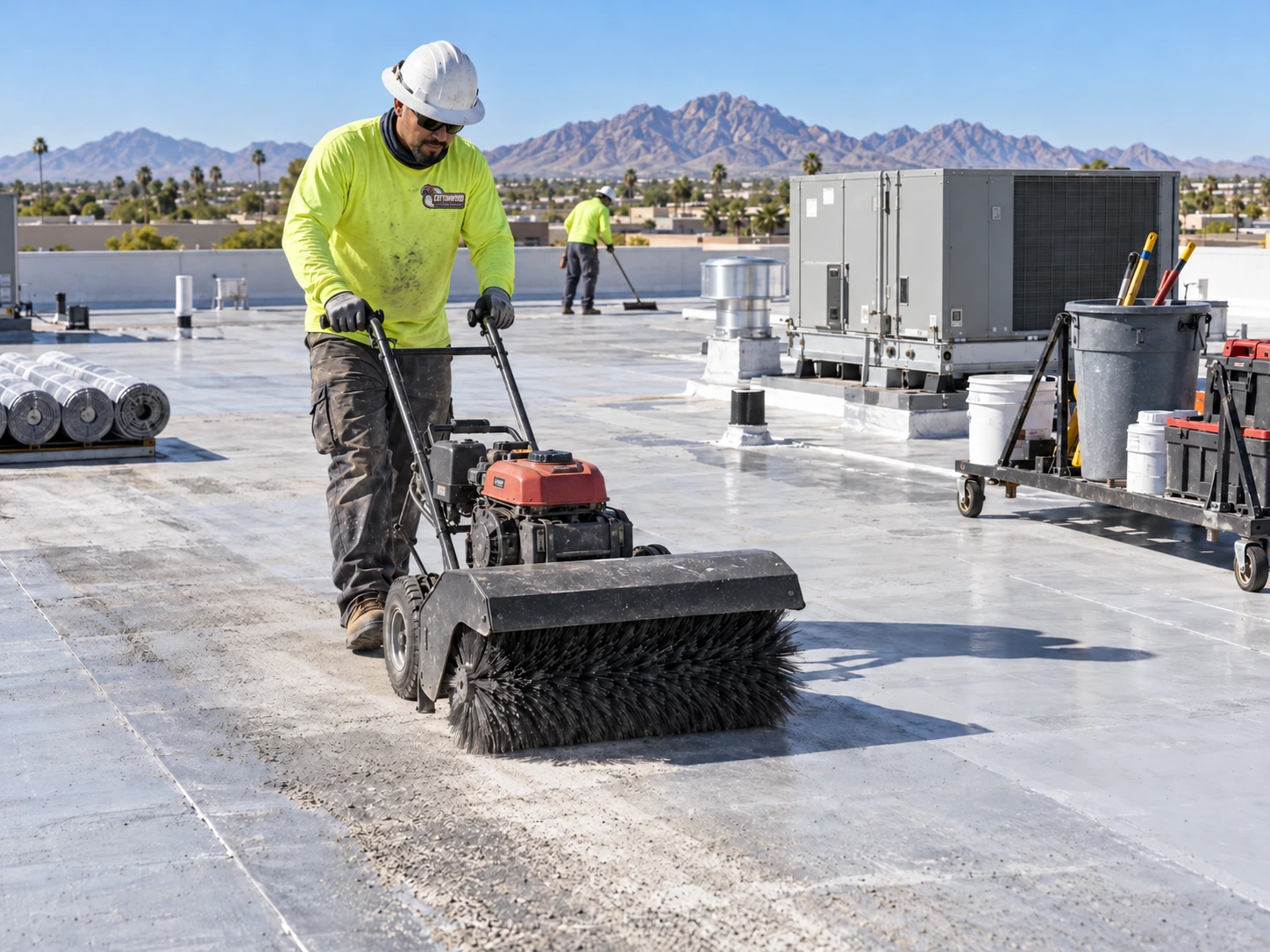
Commercial roof surface preparation before protective coating

Plan Acrylic Coating Around the Building

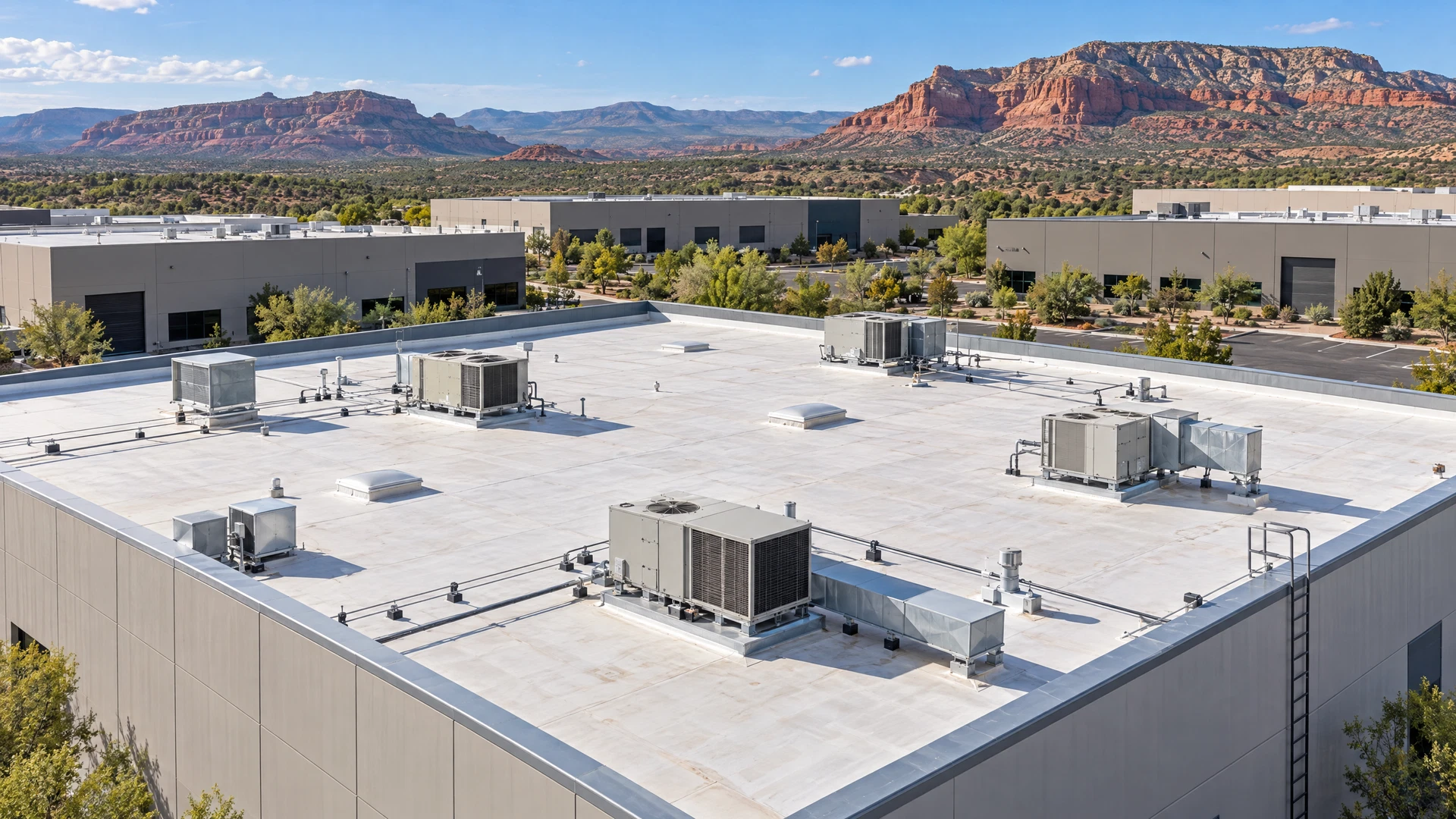
Commercial roof layout with rooftop equipment

Give the roof work a schedule that can move with the weather. Water-based acrylic coating needs suitable drying conditions, so the useful planning question is whether the roof and forecast provide enough time for the planned application. Rain, dew, damp surfaces, or an interrupted drying window can require a pause or a new work date.

Coordinate roof access with the people who manage the property. Identify access routes, rooftop equipment, tenant or staff activity, deliveries, and any building areas that need protection or notice. A focused access plan helps the crew reach the work area while the facility team keeps control of normal operations.

Keep the roof decision connected to future maintenance. Record the existing system, completed repairs, treated bleed-through areas, coated sections, and conditions that were left outside the scope. When the building is considered for another recoating cycle, those records give the next inspection a more useful starting point.

Acrylic Roof Coating Questions

When Might Acrylic Roof Coating Be a Good Option?

Acrylic can work well on compatible commercial roofs with good drainage. Because many acrylic coatings are water-based, installation conditions matter. They generally need suitable temperatures and enough dry weather to cure correctly. Roof Coatings Manufacturers Association

Can Commercial Roof Coating Be Applied in Winter?

Sometimes, depending on the product and weather conditions. Some water-based coatings require temperatures around 50°F and rising, while other products may have different limits. We plan around the actual coating specifications and weather window. Roof Coatings Manufacturers Association

Is my commercial roof a fit for acrylic coating?

Acrylic coating is considered only when the existing roof is structurally sound, dry, clean, repaired, and compatible with the selected system. Inspection must also address moisture concerns, existing coating adhesion, drainage conditions, and roof details. If the assembly is not coating-ready, repair or replacement may be more appropriate.

What condition and preparation does acrylic coating require?

The surface needs to be prepared for the specific product system. That can include cleaning, correcting loose or failing material, completing repairs, addressing moisture concerns, and preparing seams, penetrations, edges, transitions, and other details. A new coating should not be used to cover unresolved roof defects.

Commercial Roof Planning

Review Your Roof for an Acrylic Coating Scope

Acrylic Roof Coating decisions for Cottonwood properties begin with water-based application conditions, asphaltic bleed-through and detail work, recoating decisions, and weather windows. Use the estimate path for an initial planning range or call to discuss the roof directly.

Call Us(928) 436-4821