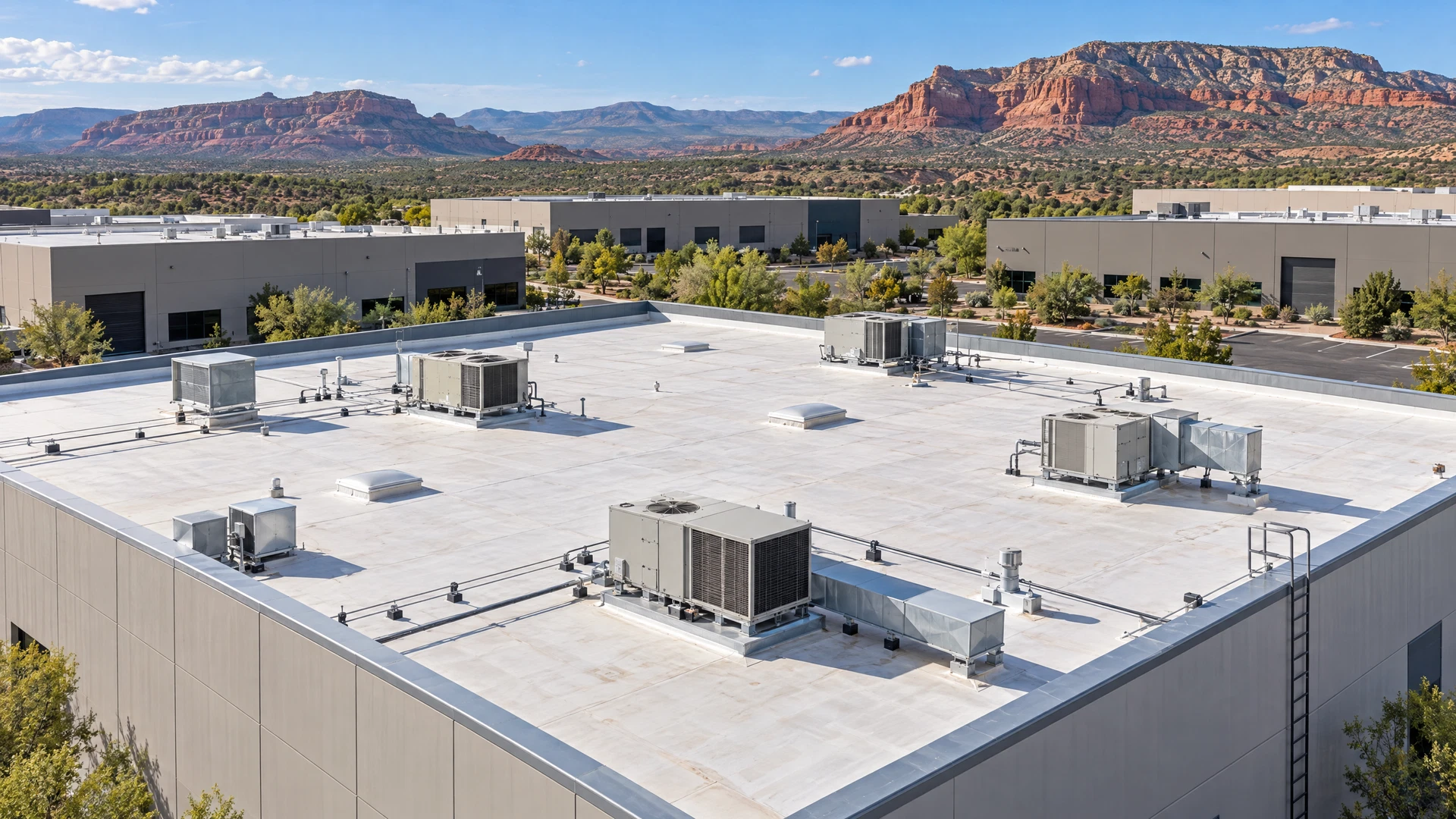
A commercial roof may look like a candidate for recovery while hidden moisture, loose materials, weak attachment, or unresolved leaks point toward removal. Spray foam does not make those conditions disappear. The first question is whether the existing roof is clean, dry, secure, and compatible with the proposed system. That answer sets the scope.
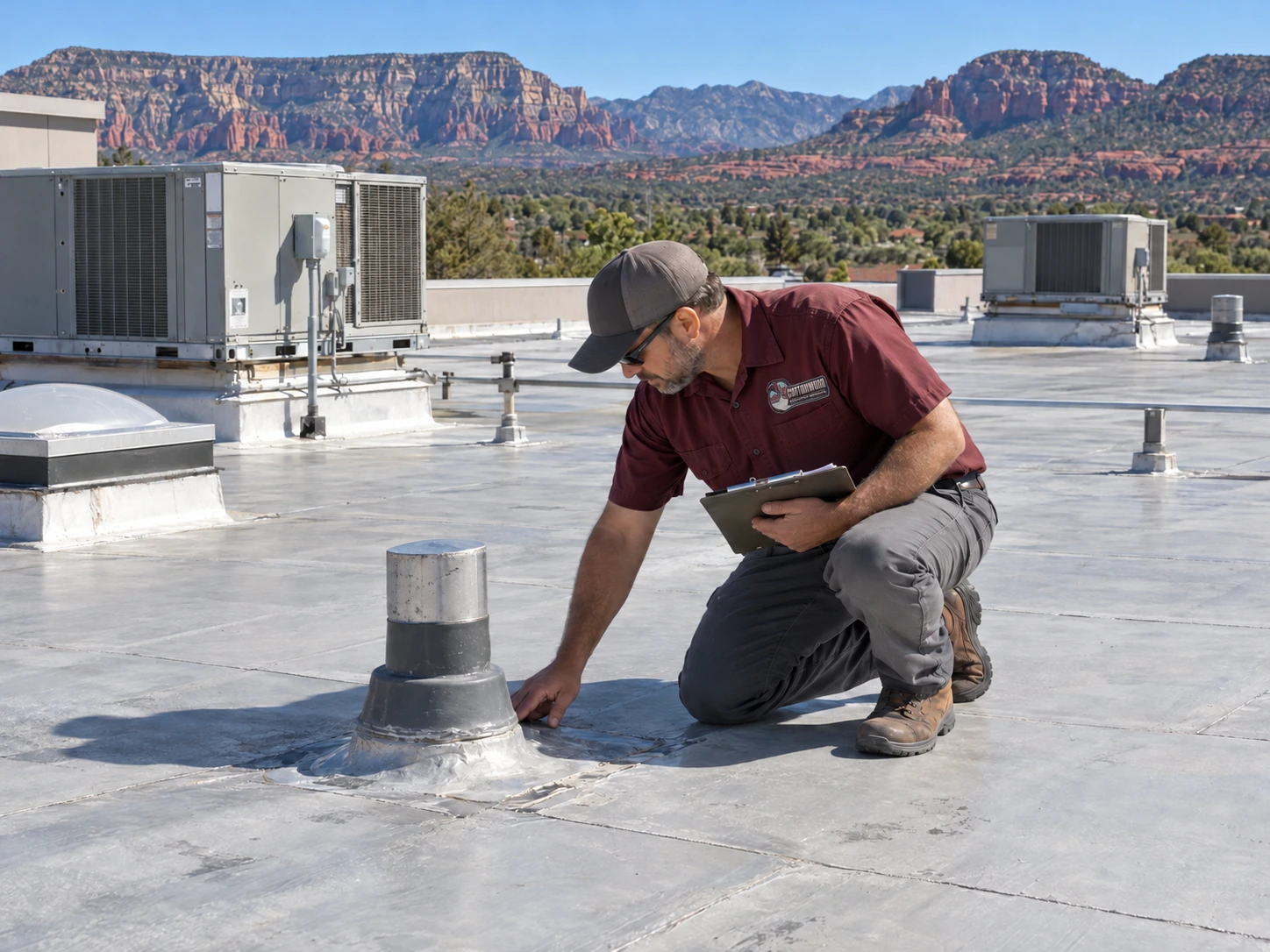
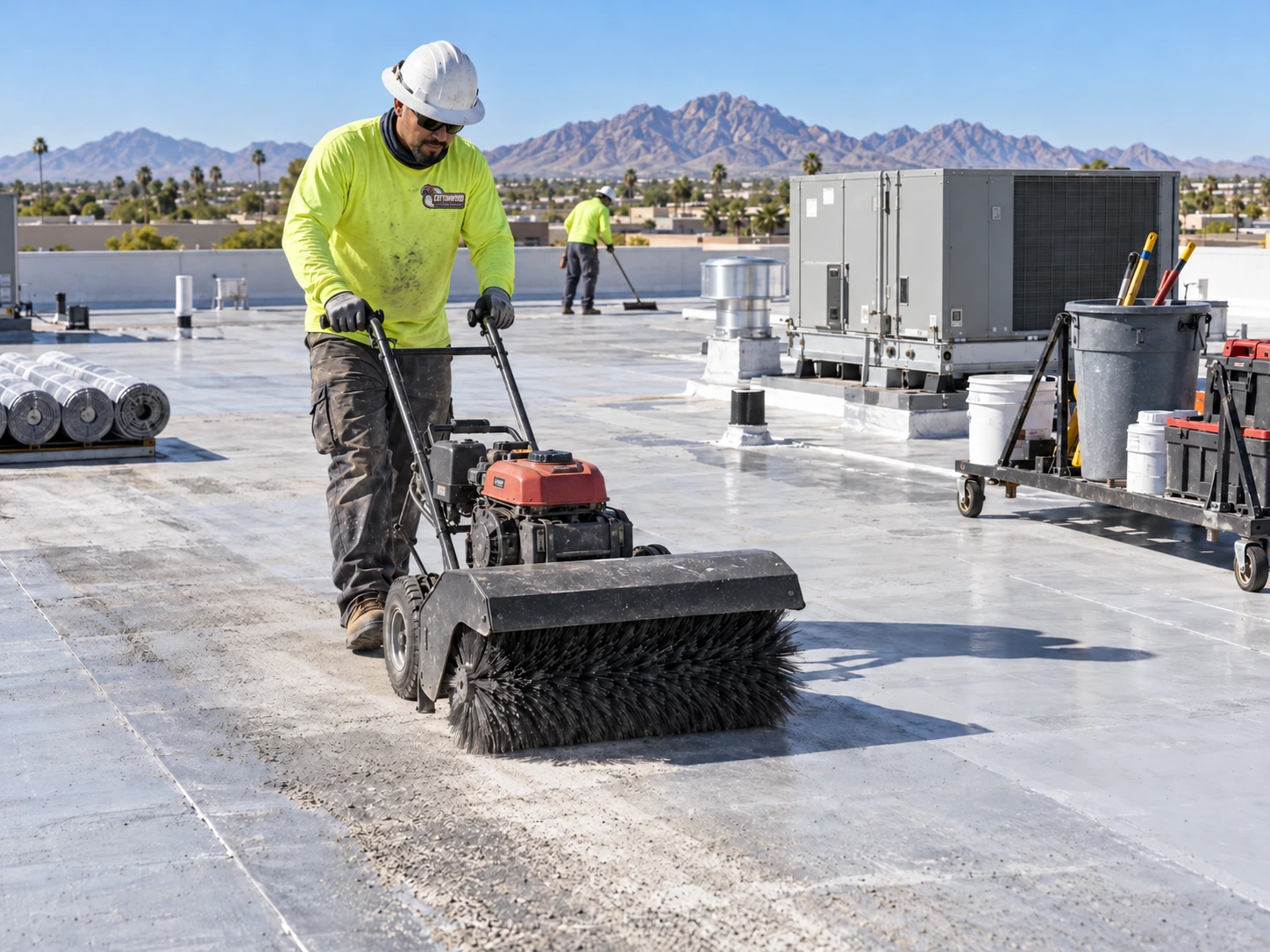
When recovery is reasonable, preparation carries the work. The roof surface needs cleaning and repair before foam is applied. Areas around penetrations, curbs, drains, edges, seams, and other changes in plane need their own inspection and detail plan. A secure substrate gives the foam a dependable surface to bond to and helps keep the finished assembly within the system requirements.
Moisture deserves a direct decision. Wet insulation or trapped water can remain a problem beneath a new layer, so drying, moisture investigation, and removal of unsuitable materials belong in the scope when conditions require them. We use the roof findings to separate recoverable areas from sections that need more extensive work.
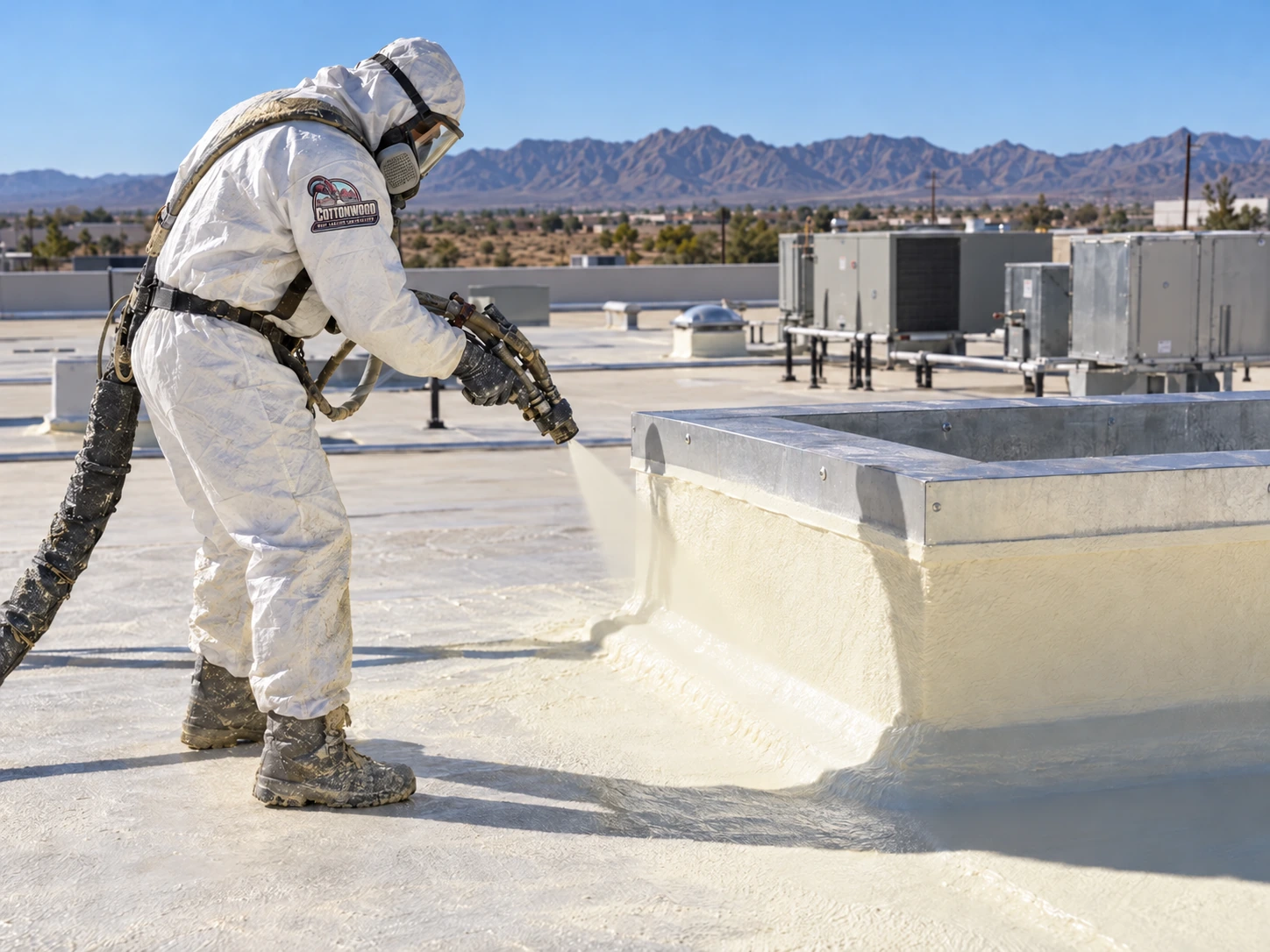
Spray foam also changes how the building and work area must be managed during application. Overspray can affect nearby property and equipment. Air intakes, rooftop HVAC units, vents, doors, and occupied areas need a protection and access plan before spraying begins. The coating placed over the foam is part of that plan because it protects the finished surface and must be selected for the system, exposure, and expected maintenance approach.