Details Get Their Own Review
Edges, seams, penetrations, curbs, fasteners, and transitions are examined as individual roof conditions. That keeps small but consequential details from disappearing inside a broad coating allowance.

Commercial Roof Coating Service Area
A Precise Roof Scope for Jerome Commercial Properties. Commercial roofs with multiple elevations, transitions, penetrations, curbs, and edge details need a scope that follows the roof instead of flattening every condition into one treatment. Cottonwood Roof Coating reviews each area, identifies what coating can address, and marks work that needs repair or a different roof decision.
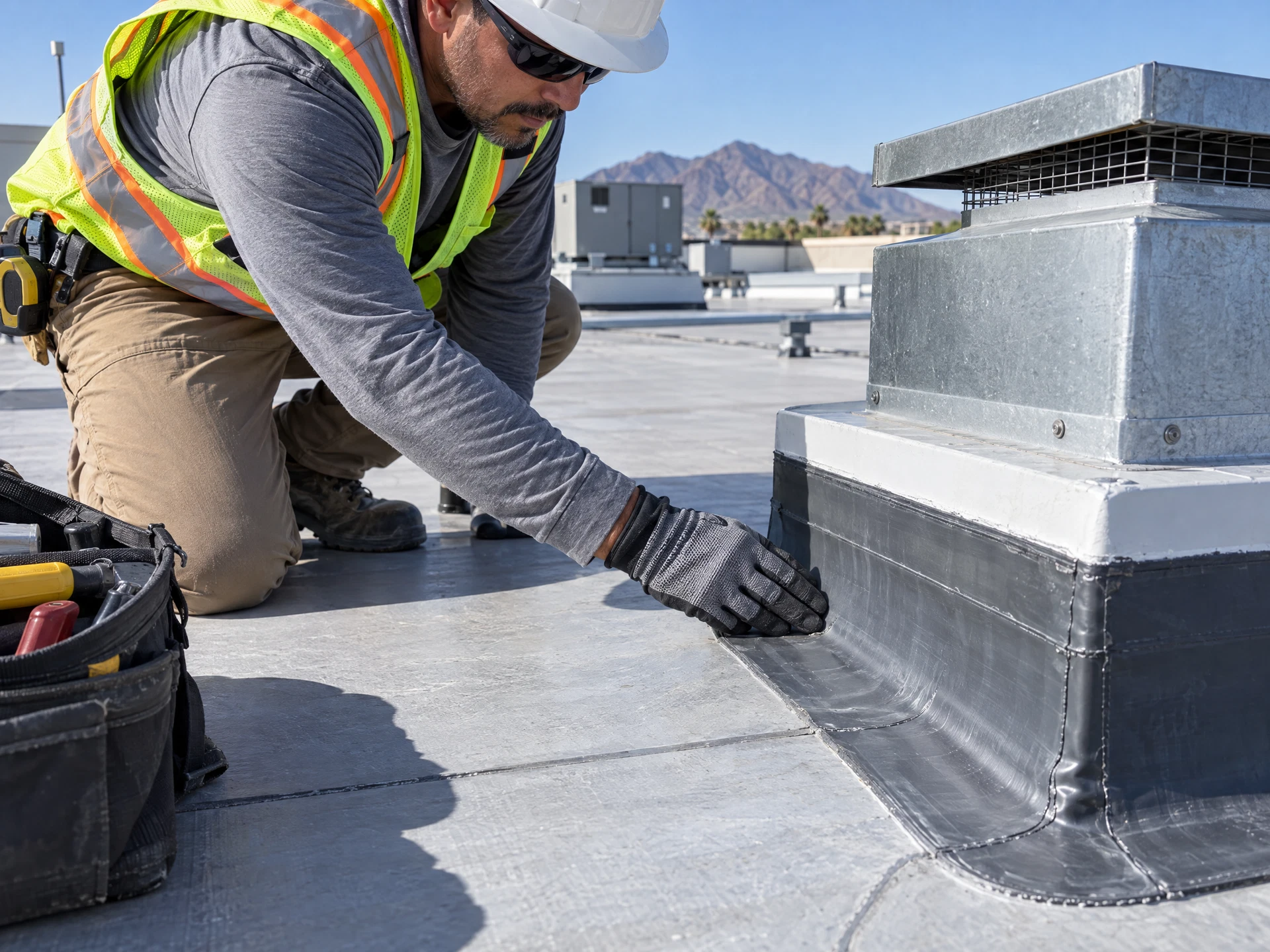
A roof can look like one surface from the parking lot and still contain several different work areas. Metal panels meet flashings. Curbs interrupt drainage paths. Seams, fasteners, parapet edges, penetrations, and transitions each place different demands on preparation and system selection. A commercial roof coating plan for a Jerome property should account for those details before anyone measures material.
Our first task is to understand the existing assembly and its condition. We look for moisture, corrosion, loose or failed components, previous repairs, drainage concerns, and surfaces that may affect adhesion. The inspection helps separate sound, repairable areas from conditions that coating alone should not be asked to solve.
That boundary protects the building owner and the facility team from an overbroad scope. Coating can be considered where the roof is structurally sound, clean, dry, repaired, and compatible with the selected system. Other areas may need focused repair, further investigation, or a replacement discussion. The written scope should show those decisions clearly so planning starts with the roof that is actually present.
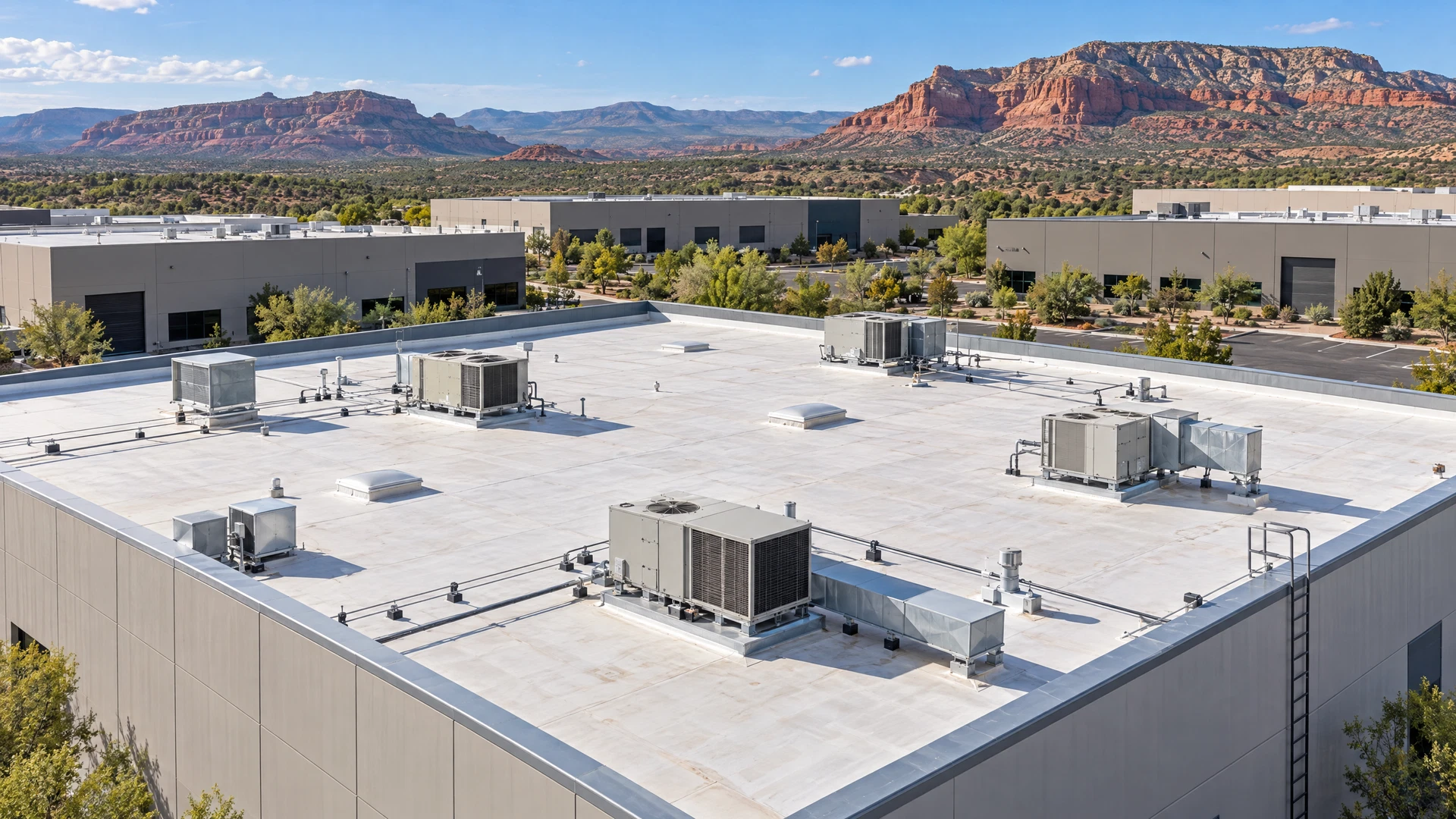
Edges, seams, penetrations, curbs, fasteners, and transitions are examined as individual roof conditions. That keeps small but consequential details from disappearing inside a broad coating allowance.
A coating recommendation is limited to areas that meet the required condition and compatibility checks. Areas outside that gate remain visible for repair, investigation, or another roofing decision.
Cleaning, drying, repairs, primers, and adhesion testing are considered against the existing roof surface and the selected product. Preparation is treated as part of the system rather than a quick preface.
Owners and facility managers can review what is included, what is excluded, and what needs attention before coordinating roof work with operations, access, and future maintenance.
For a Jerome commercial roof, the useful choice begins with a scope map that follows the geometry instead of treating the roof as one uninterrupted field. Trace each elevation, the transitions where planes or materials meet, every curb and penetration, parapet or edge condition, seam, fastener line, and drainage path. A coating may be workable on one plane while a raised curb, failed flashing, corroded panel, or wet transition needs separate repair or investigation. Metal roof coating is relevant only when the metal assembly, existing finish, movement, fasteners, seams, moisture, and slope can be reviewed together. Kynar- or Hylar-type finishes and steep slopes are not automatically compatible. The written option should name the sections included in the coating scope and keep those details from disappearing inside a blanket square-foot allowance.
Preparation should follow that Jerome map and keep control at every interruption in the roof surface. Cleaning, drying, repairs, failed sealant work, primer selection, and adhesion testing may differ between a field area and the curb or transition beside it. Silicone and acrylic can support different decisions, so the record should show which system was checked against each substrate and what must happen before material crosses a seam or detail. A silicone review still needs moisture and ponding investigation, drying, repairs, primer needs, and product-specific compatibility. An acrylic recommendation depends on a structurally sound, dry, clean, repaired, compatible roof and suitable application conditions. Neither category should be used to hide a drainage defect or imply that every active leak is resolved by a surface treatment.
Some Jerome roof areas should be excluded from a coating scope on purpose, with the reason recorded beside the location. Spray foam roofing calls for a clean, dry, secure substrate, specified primer where required, controlled application conditions, and protection for HVAC equipment and nearby surfaces; an existing area should not be presumed recoverable without system-specific compatibility. Shingle roof coating is a narrower decision requiring written manufacturer compatibility and applicable code checks, with repair or replacement potentially more appropriate than field treatment. The final option should give the property owner and facility manager an area-by-area record of included elevations, preparation, protection, exclusions, and follow-up questions. That boundary supports site control during work and leaves a usable record for the next inspection or repair decision.
We review roof sections, elevations, penetrations, curbs, edges, seams, fasteners, drainage paths, existing finishes, and visible repair areas. The goal is a condition map for the commercial property, not a surface-only look.
We sort observed conditions into coating candidates, required repairs, areas needing more investigation, and conditions that may call for replacement planning. This keeps the recommended work tied to what the roof can support.
Accepted areas are evaluated for cleaning, drying, loose material, failed sealants, fasteners, seams, penetrations, and other detail work. Surface preparation and repairs are matched to the roof and the system under consideration.
The proposed coating or roofing system is checked against the substrate, existing finish, primer requirements, application conditions, and detail requirements. Adhesion and manufacturer guidance matter before material is applied across a field.
The final work plan identifies the areas, sequence, preparation, protection, and follow-up needs that affect the building. Facility teams can use that boundary to coordinate access and ongoing roof maintenance.
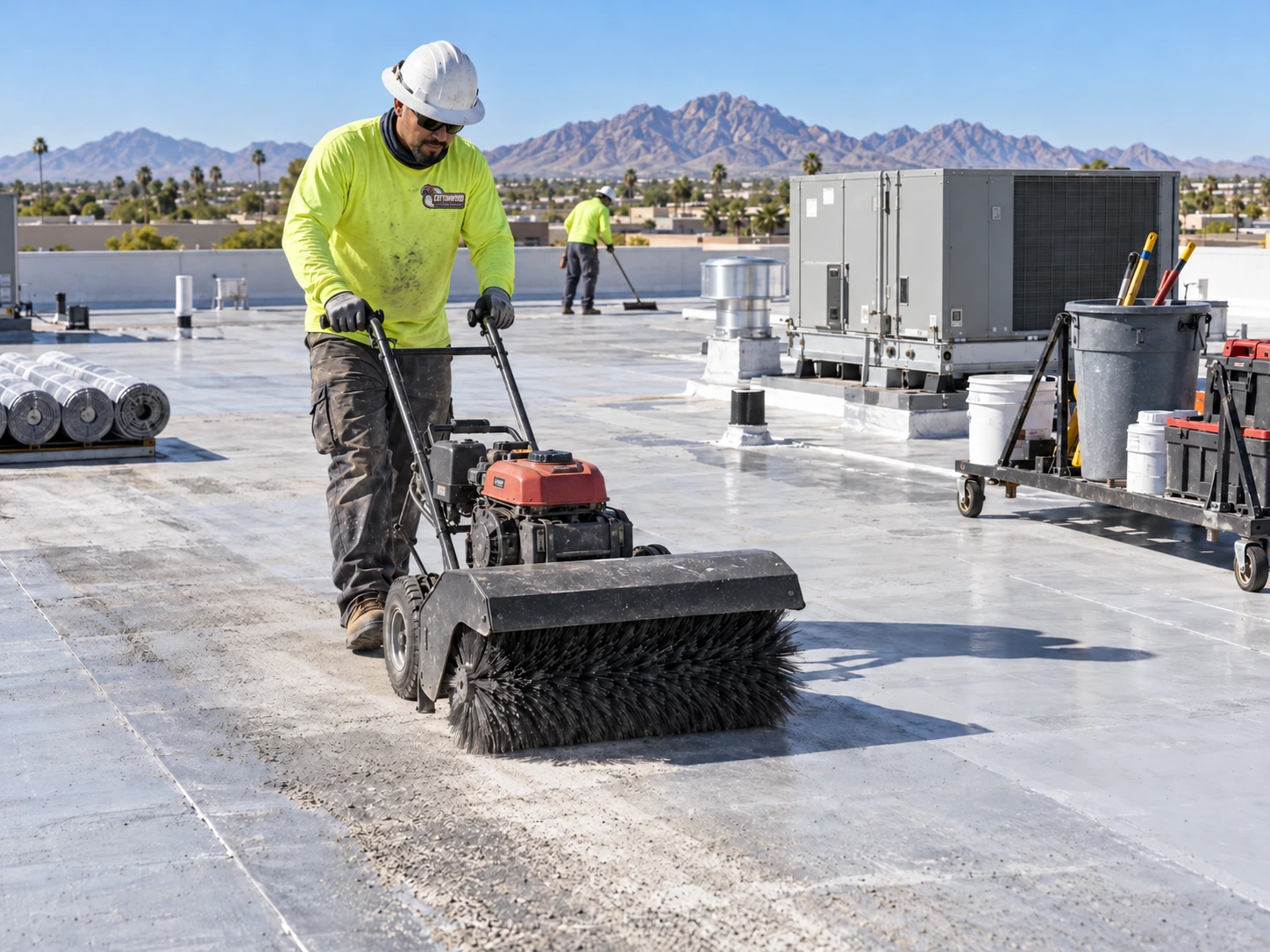
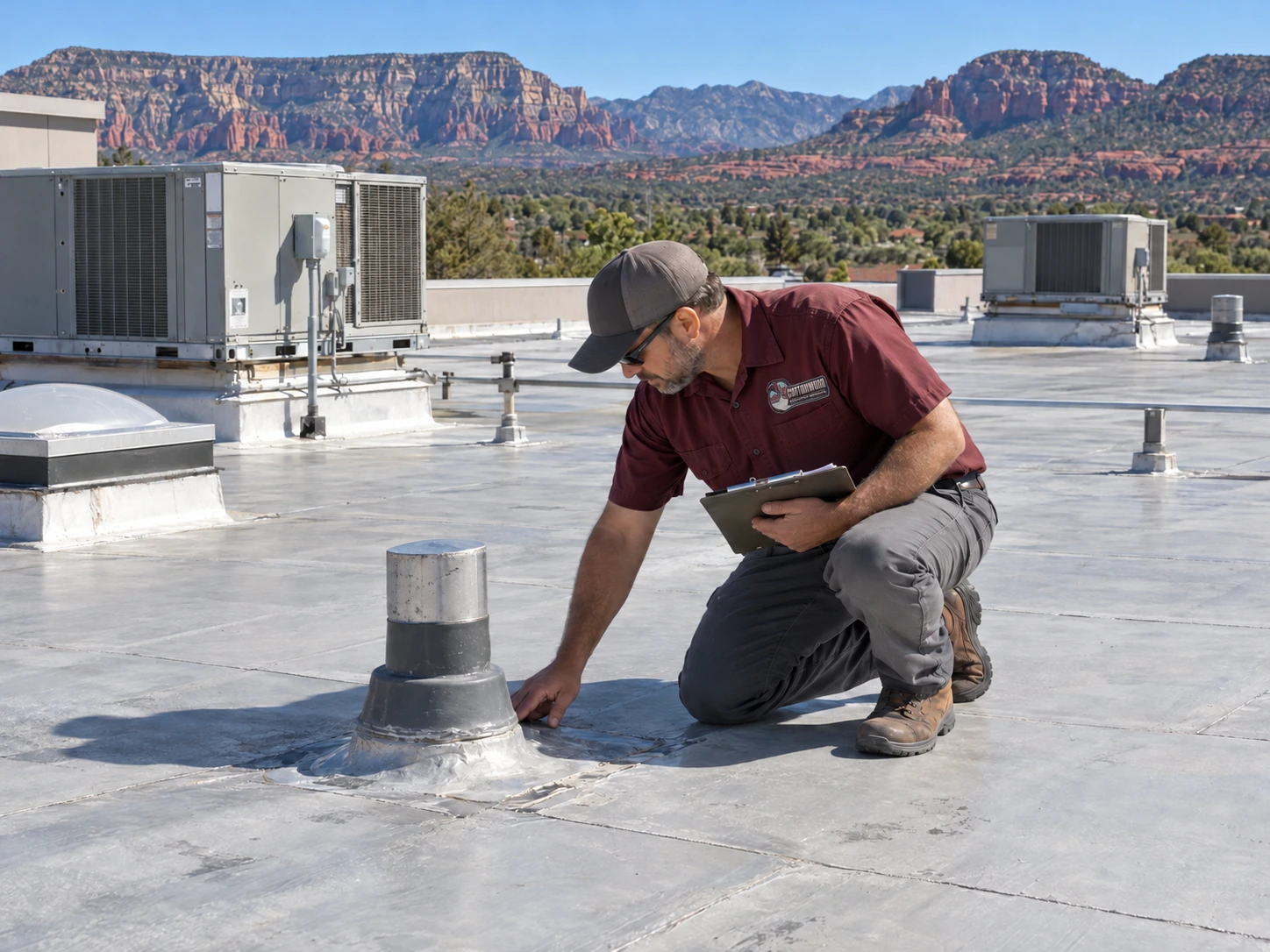
Complex roof details often sit where other building responsibilities converge. Penetrations may serve mechanical equipment. Curbs and edges may affect service access. Work areas may sit beside occupied space, stored materials, or routes that cannot be treated as open staging. A useful scope names the roof areas and the building-side conditions that must be considered before mobilization. It also gives the facility team a shared reference when several people review the work plan.
Give the inspection team access to roof sections, known leak or moisture locations, prior repair information, and any restrictions facility staff already manage. If several roof surfaces connect, identify the transitions instead of treating each plane as an isolated square. This helps the review follow water-shedding paths and detail conditions across the assembly. Mark equipment, access doors, and sensitive areas that require protection or a planned work sequence.
After the scope is defined, keep the boundary in the building record. Track repairs, coating areas, excluded conditions, maintenance observations, and future inspection needs. A clear record helps the next roof decision start with known information rather than forcing the facility team to reconstruct what happened at every seam and penetration. Review that record during routine facility planning so changed conditions can be identified early.
Fit depends on the existing assembly and its condition. The roof should be evaluated for structural soundness, moisture, corrosion or damage, drainage, surface condition, repair needs, and compatibility with the proposed system. A roof with areas outside those limits may need repair, more investigation, or replacement planning instead of blanket coating.
The review should address active or suspected moisture, damaged or loose components, failed seams or fasteners, unsuitable existing finishes, unprepared surfaces, and detail conditions that coating cannot correct. Coating should not be used to conceal a condition that requires a separate roof repair or building decision.
Preparation can include cleaning, drying, repairs, primer selection, detail treatment, and adhesion testing, depending on the substrate and product instructions. Metal, silicone, acrylic, spray foam, and shingle-related reviews each have different compatibility limits. The existing roof and documented system requirements should guide the choice.
Start with a roof map that identifies included areas, excluded conditions, access points, equipment, transitions, protection needs, and sequence. Share known access or occupancy restrictions during planning. A defined boundary gives the building team a practical way to coordinate roof work with daily responsibilities and future maintenance.
Commercial Roof Planning
For Jerome commercial properties, begin with complex roof details and a careful scope boundary. Use the estimate path for an initial planning range or call to discuss the building and roof conditions directly.