Commercial Roof System

Cottonwood Metal Roof Coating

Decide What Your Metal Roof Needs Before You Coat It. Metal roof coating starts with the panels beneath the finish. We look at corrosion, fasteners, seams, panel movement, moisture, drainage, and the existing finish to determine whether the assembly can be repaired and prepared for a compatible coating system.

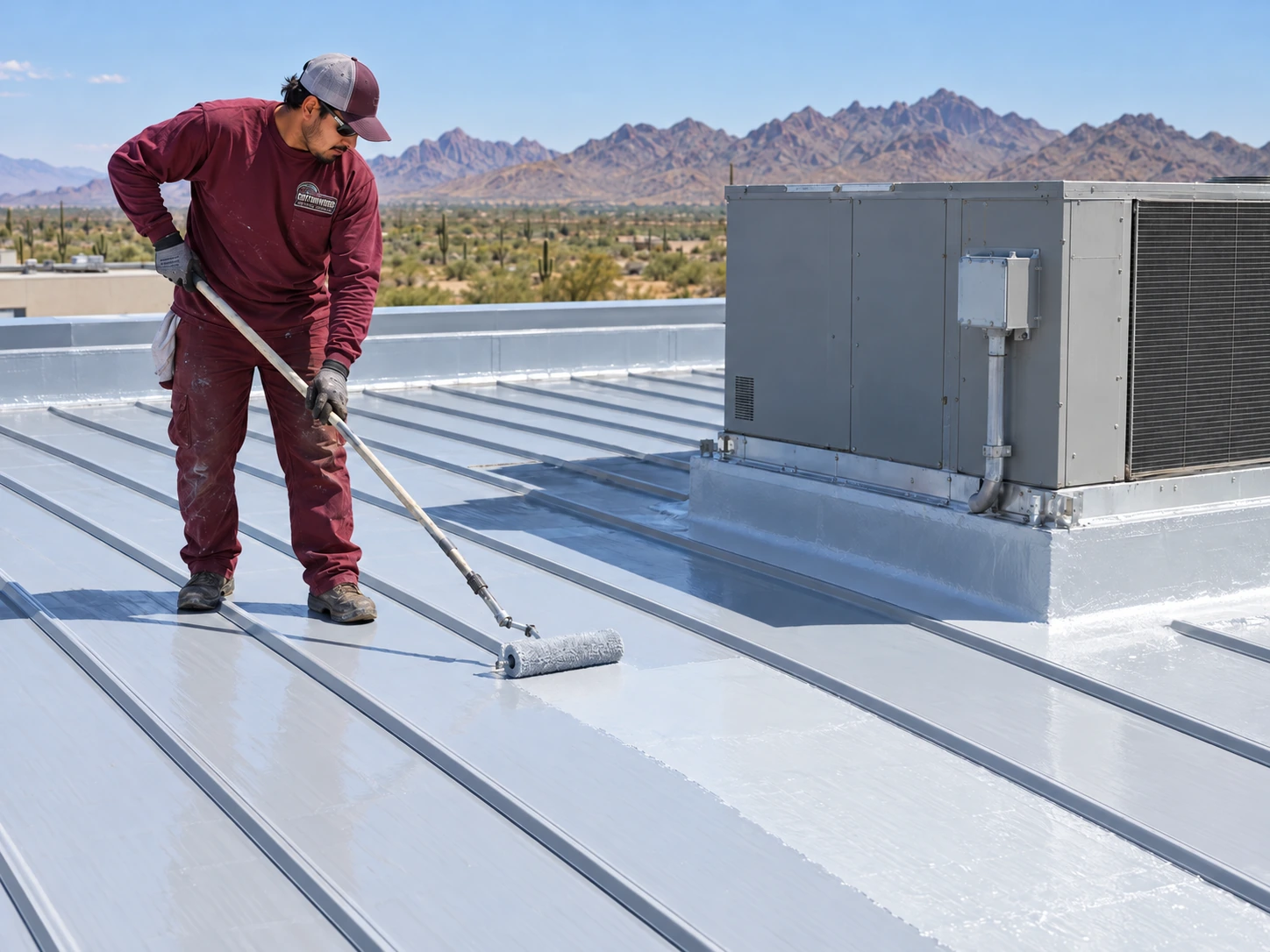
Technician applying protective coating on a commercial metal roof

A Metal Roof Needs an Honest Condition Review

A metal roof can look like a straightforward coating project from the ground. Up close, the work depends on dozens of connected parts. Panels move as temperatures change. Fasteners loosen or lose their sealing washers. Seams open, corrosion reduces metal thickness, and old finishes affect adhesion. Water can also collect at transitions, penetrations, curbs, and drainage points. A coating applied over those conditions does not repair the assembly by itself.

Our starting question is practical: can this roof be made sound enough, clean enough, dry enough, and compatible enough for a coating system? That answer comes from inspecting the metal and its details, then separating repairable conditions from areas that need a different scope. The result is a clearer decision for a property owner or facility manager who has to protect the building and plan work around daily operations.

Metal roof coating may be appropriate when the panels remain serviceable and the needed repairs can be completed before application. It requires more than choosing a product from a color chart. The existing finish, roof slope, moisture history, fastener pattern, seam construction, and manufacturer requirements all matter. We use those observations to define what preparation is needed and where a coating should not be specified.

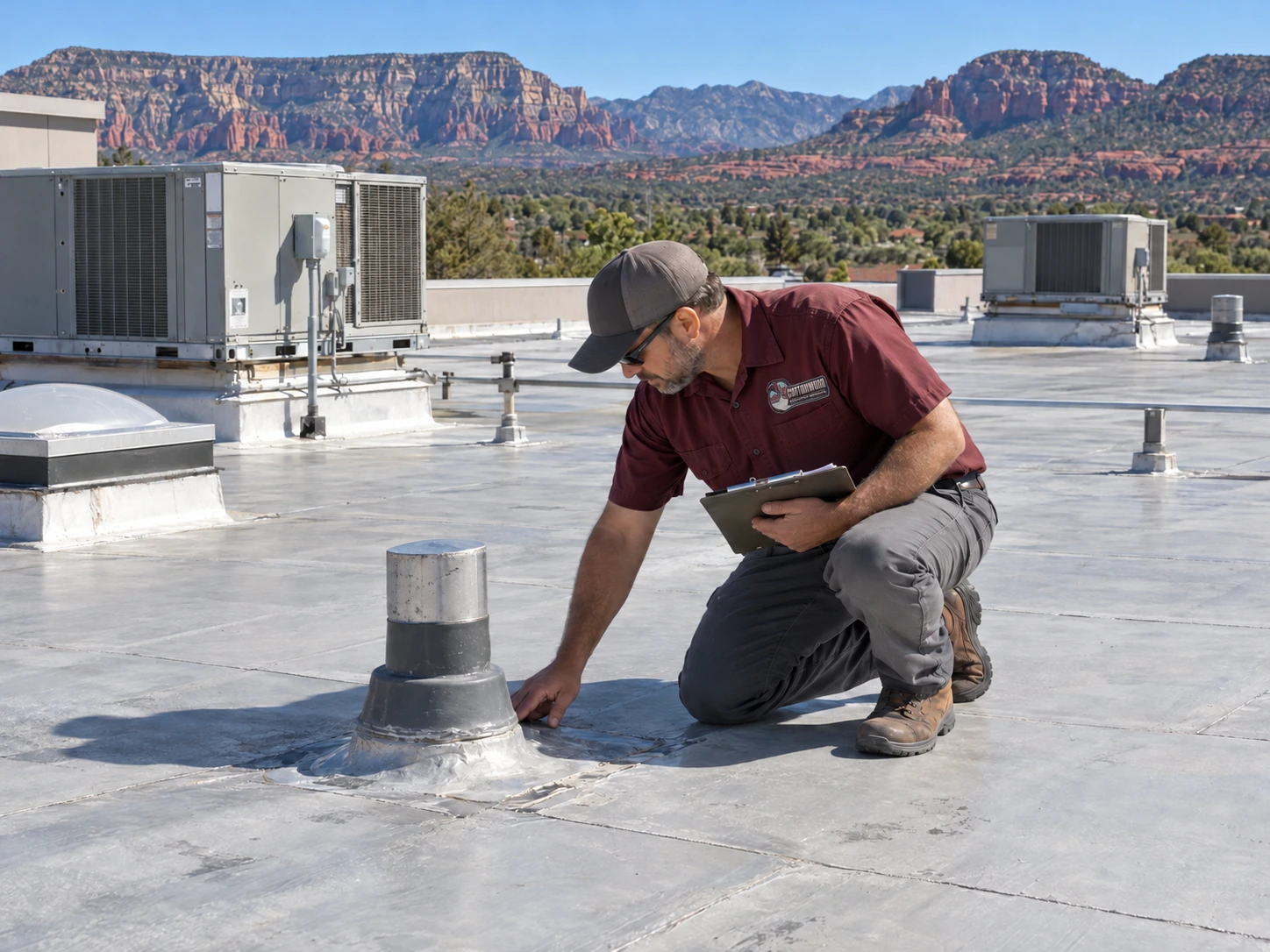
Inspector assessing commercial roof details before selecting a system

Benefits of Coating Your Roof

A Clear Repair Boundary

An inspection helps identify areas that can be repaired as part of a coating scope and areas that may require replacement or a separate repair plan. That boundary keeps the finish from being asked to solve a metal or structural problem.
Attention to the Details That Leak

Fasteners, laps, seams, penetrations, curbs, and edge conditions receive their own review. Detailing those locations before field application gives the coating system a prepared surface to bond to and a defined path across the roof.

Compatibility Before Commitment

Existing paint and specialty finishes are not assumed to accept every coating. Cleaning, adhesion testing, primer selection, and product requirements are considered together, including when a Kynar or Hylar-type finish needs additional review.

A Work Plan Your Building Can Use

The scope can be organized around access, rooftop equipment, occupied areas, weather windows, and follow-up maintenance. That gives building owners a practical sequence for coordinating roof work with the people and systems below it.

Commercial Roof Coating Options for Cottonwood

A metal roof coating system is selected after the substrate and existing finish are understood. The decision can involve an elastomeric coating, a compatible primer, seam and fastener detailing, and a specified finish coat. The right combination depends on the roof's condition, slope, moisture exposure, surface preparation, and the product manufacturer's written requirements. A generic coating recommendation leaves too many of those decisions unresolved.

Silicone may be considered where its product requirements fit the prepared metal and the roof's service conditions. Acrylic may be considered when its application conditions, substrate requirements, and maintenance expectations fit the assembly. Those names do not make a system automatically suitable. We look at adhesion, existing coatings, repaired corrosion, seams, and areas that may hold moisture before discussing a system choice.

Some metal roofs are poor coating candidates in their current state. Extensive section loss, unsecured panels, unresolved movement, wet insulation or substrate conditions, active water entry, or incompatible finishes can change the scope. A responsible coating review should identify those limits instead of treating every metal roof as ready for the same application.

What Happens Next?

  1. 01

    Inspect Your Roof

    We review panels, fasteners, seams, laps, penetrations, curbs, edges, drainage paths, visible corrosion, existing finish, and signs of moisture. We also look for movement or attachment conditions that a coating cannot correct.

  2. 02

    Map Repairs and Movement

    We separate loose or failed fasteners, open seams, damaged flashings, corrosion, panel distress, and other details into a repair plan. Panel movement is considered at laps, attachments, transitions, and penetrations so the coating is not expected to hold a moving defect together.

  3. 03

    Confirm Coating Readiness

    The roof must be clean, dry, repaired, and suitable for adhesion testing before a system is specified. We review the existing finish and primer needs. Specialty finishes such as Kynar or Hylar-type coatings require specific compatibility review rather than an automatic coating assumption.

  4. 04

    Prepare and Detail the Metal

    Preparation follows the selected system's requirements. It may include cleaning, treating corrosion, replacing or securing fasteners, sealing seams, repairing flashings, and detailing penetrations. Drains, rooftop equipment, and adjacent building areas are included in the access and protection plan.

  5. 05

    Apply and Review the System

    Application follows the specified product, weather, surface, and coverage requirements. After the work, the roof is reviewed for continuous coverage and detailed areas. The building team receives the conditions that matter for future inspections and maintenance.

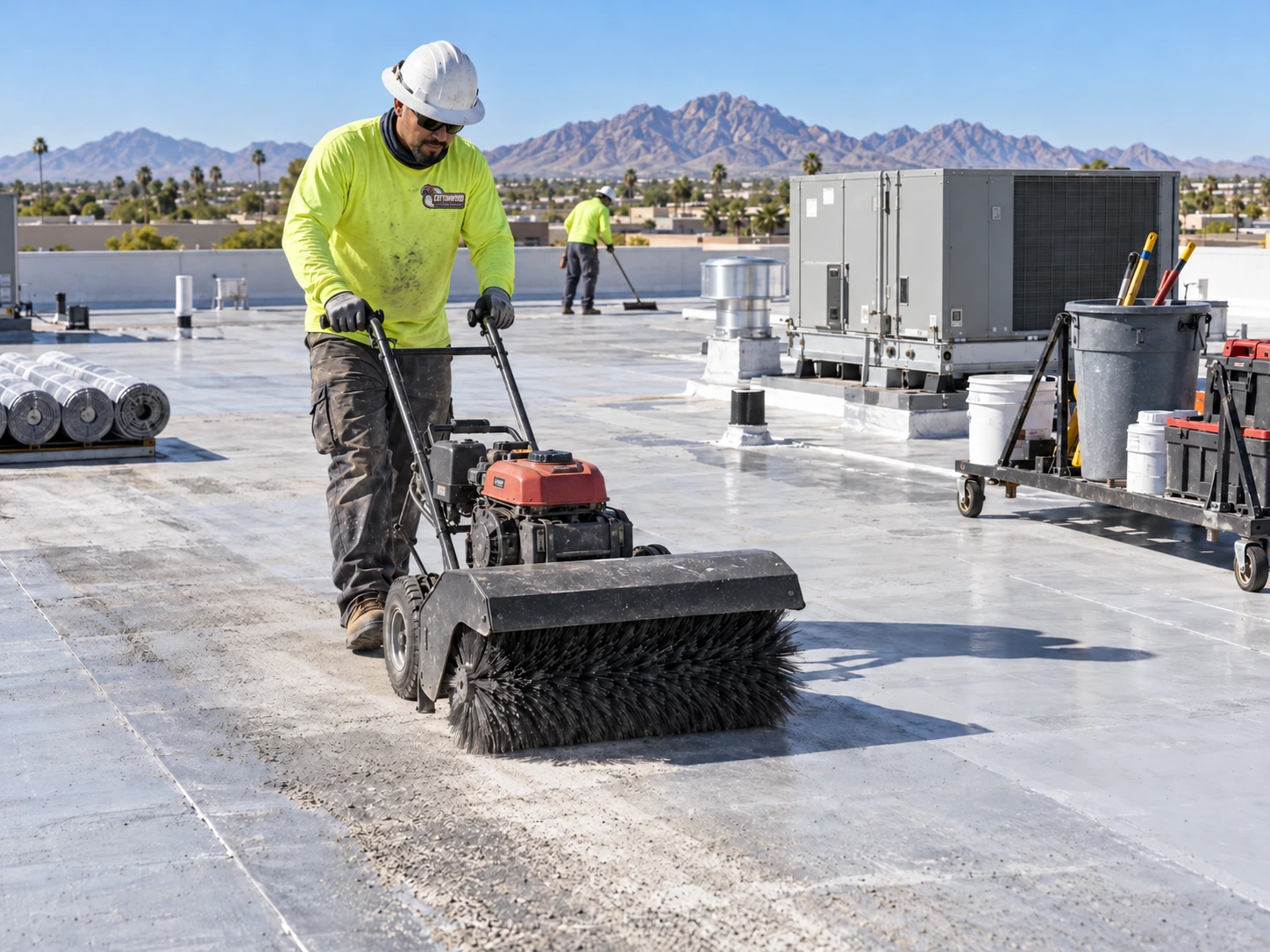
Commercial roof surface preparation before protective coating

Plan the Work Around the Building

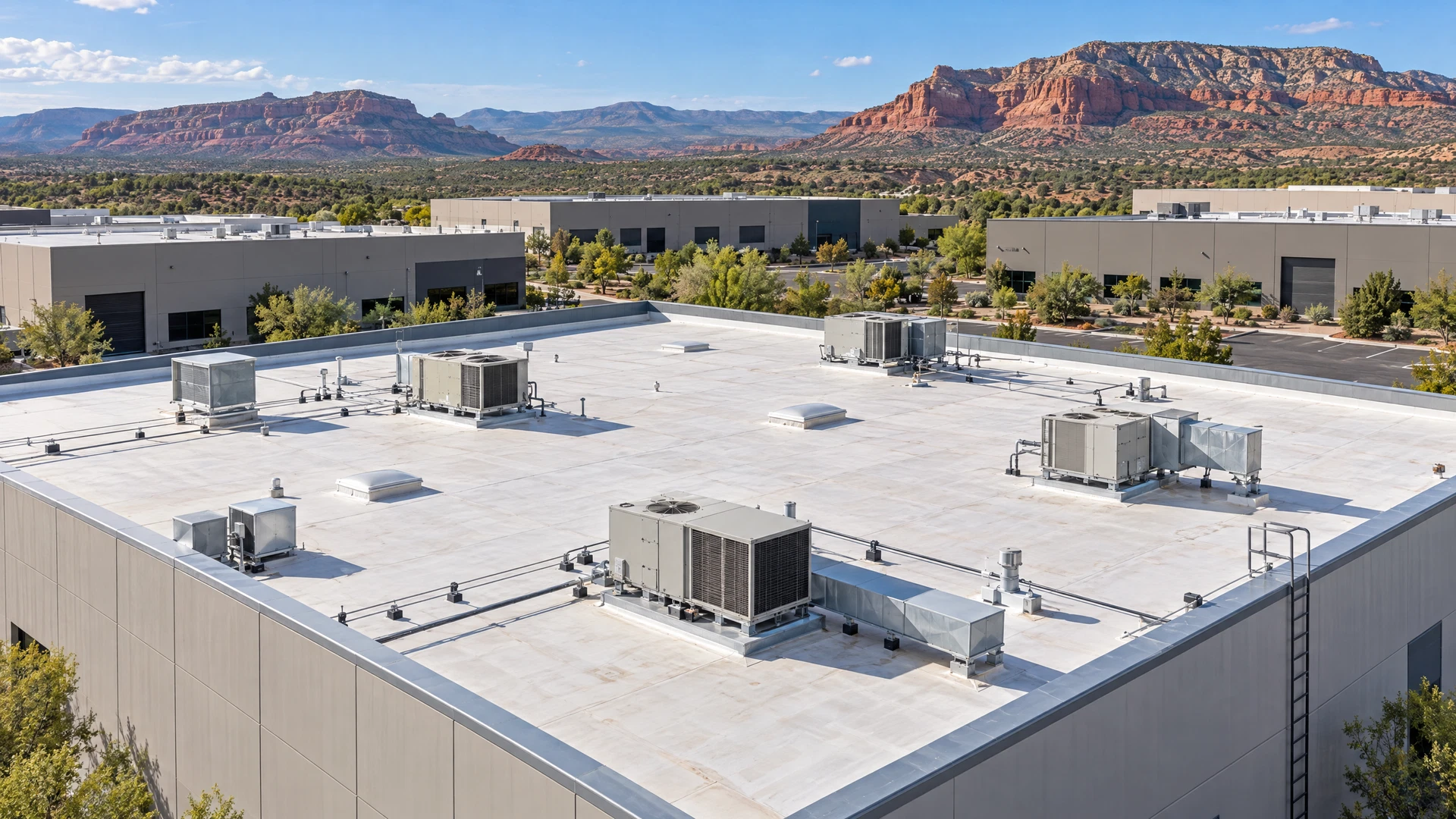
Commercial roof layout with rooftop equipment

Commercial roof work affects more than the roof surface. Facility managers may need to coordinate access doors, tenant activity, deliveries, rooftop HVAC equipment, alarms, skylights, and areas below the work zone. A metal roof review should identify these constraints early so preparation and application can be sequenced without treating the building as an empty site.

Weather and surface conditions also influence the schedule. Cleaning, repairs, adhesion testing, and coating application each depend on the system requirements and the condition of the substrate at that stage. A roof that is visibly dry in the morning may still need a closer moisture review around seams, penetrations, and drainage areas. Planning should leave room for that inspection rather than forcing application into a calendar date.

Keep the roof history with the property records. Note previous coatings, repaired leaks, replaced fasteners, known movement, drainage concerns, rooftop equipment changes, and areas that were excluded from the coating scope. Those records help the next inspection begin with the actual assembly instead of an assumption that a finished roof is uniform.

Metal Roof Coating Questions

Can You Coat a Commercial Metal Roof in Cottonwood?

Yes, if the metal roof is still in suitable condition. We check for rust, loose fasteners, open seams, panel damage, and failed sealant before coating. Rusted-through or badly damaged panels may need repair or replacement first.

Do Roof Repairs Need to Be Finished Before Coating Starts?

Yes. Coating is usually one of the later steps in the restoration process. Loose seams, open flashing, damaged membrane, rusted metal, and similar problems should be dealt with first.

Is my metal roof a good fit for coating?

A metal roof may be a coating candidate when its panels and attachments remain serviceable, corrosion and seam conditions can be repaired, the roof can be cleaned and dried, and the existing finish is compatible with the selected system. Inspection is needed before making that determination.

What roof conditions can change the coating decision?

Extensive corrosion, loose panels, unresolved panel movement, recurring water entry, wet areas, damaged flashings, poor drainage conditions, or an incompatible existing finish can change the scope. Some areas may need repair or replacement instead of coating.

Commercial Roof Planning

Have Your Metal Roof Reviewed for Repair and Coating Readiness

Metal Roof Coating decisions for Cottonwood properties begin with corrosion, fasteners, seams, panel movement, and deciding whether the metal assembly is repairable and coating-ready. Use the estimate path for an initial planning range or call to discuss the roof directly.

Call Us(928) 436-4821