Roof Condition
Review current wear, existing repairs, roof details, material condition, and any signs that call for repair or closer investigation before coating is considered.

About The Service
Commercial roof-coating information and a practical estimate path for buildings in Cottonwood and the approved Verde Valley service area.
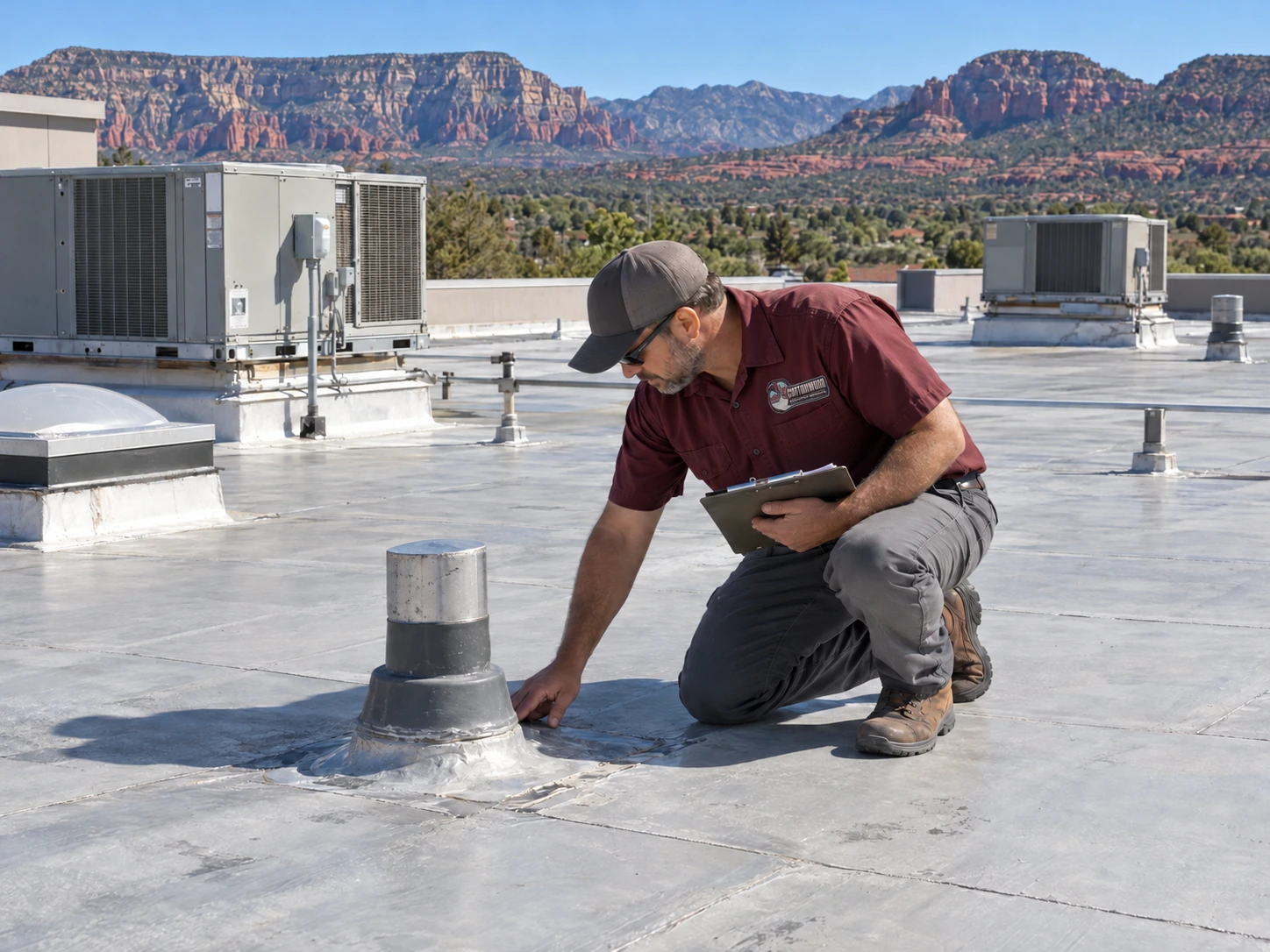
Cottonwood Roof Coating focuses on commercial buildings where roof condition, system fit, and daily operations need to be reviewed before coating work is considered. Building owners and facility managers may be dealing with a worn surface, recurring repairs, moisture concerns, or a roof that needs a closer look before the next work window.
A commercial roof can look simple from a distance while the details tell a more complicated story. Rooftop equipment, seams, penetrations, drains, fasteners, flashings, prior repairs, existing coatings, substrate condition, and signs of moisture concern all deserve a closer look. The review process is designed to put those conditions in plain language before a coating option is discussed.
The approved service categories are Metal Roof Coating, Silicone Roof Coating, Acrylic Roof Coating, Spray Foam Roofing, and Shingle Roof Coating. Each has a separate page because system fit, preparation, limitations, and work planning vary. A category name alone does not decide the right material for a roof.
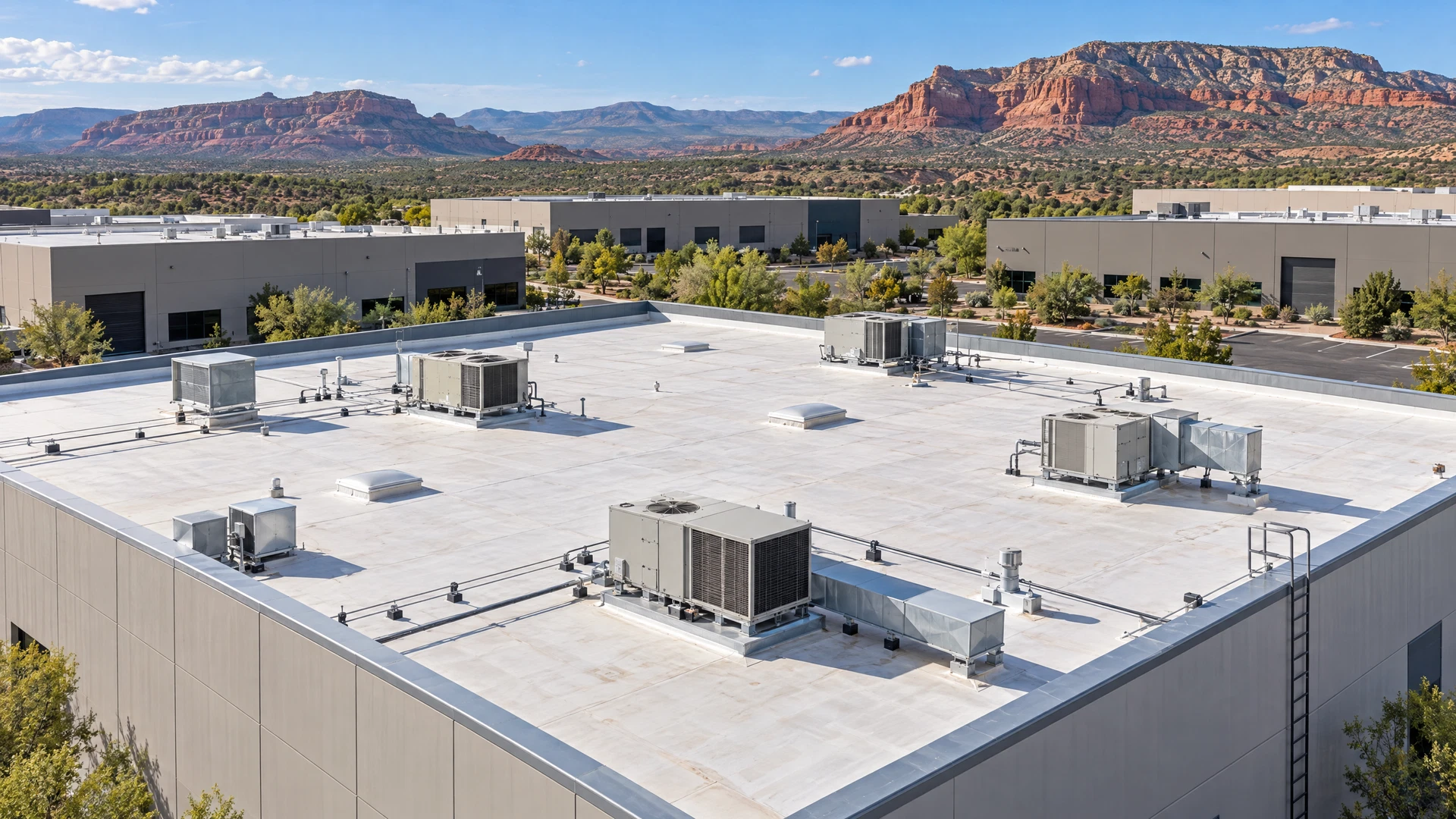
Review current wear, existing repairs, roof details, material condition, and any signs that call for repair or closer investigation before coating is considered.
Compare the existing assembly with the selected material system, including surface preparation, adhesion, compatibility, moisture, and application requirements.
Plan around rooftop equipment, work areas, protected access routes, occupants, staging, and the operational needs of the commercial property.
Use the roof findings to decide whether to discuss a coating option, repair needs, a preliminary coating-versus-replacement range, or another roofing path.
A useful roof conversation separates what is known from what still needs inspection. A roof is not coating-ready because of a photograph, a square-foot number, a building age, or a single leak description. The field review needs to account for seams, penetrations, drains, fasteners, flashings, prior repairs, existing coatings, substrate condition, and signs of moisture concern.
A coating does not replace failed roof components, correct structural movement, or prove that a drainage issue has been resolved. The selected system must match the existing assembly, repair boundary, surface condition, product requirements, access needs, and weather window. Those facts give a building decision-maker a more useful basis for comparing restoration, repair, replacement, or another roofing path.
Commercial service coverage includes Cottonwood, Clarkdale, Camp Verde, Sedona, Verde Village, Oak Creek, Cornville, Jerome, and Rimrock. Each property still needs its own condition review and work sequence.
A ceiling stain, loose fastener, ponding mark, or worn roof surface tells you where to look. It does not define the full job. The roof assembly, detail condition, previous repairs, moisture status, drainage, and rooftop equipment all affect whether a coating system belongs in the scope.
A building may need repairs, testing, cleaning, drying time, or a different roofing path before application. A light-colored finish does not guarantee the same operating result on every building, and a completed coating does not prove that ponding, structural movement, or an underlying moisture problem has been corrected.
The practical sequence is to identify the roof system, record the conditions that matter, separate repair areas from coating-ready areas, and coordinate access and timing around the property. That keeps the decision tied to the building rather than to a generic material claim.
A building owner or facility manager can make the first review more useful by collecting the commercial address, known roof type, areas of concern, prior repair information, access notes, rooftop equipment locations, and the operational constraints that affect scheduling. The information does not determine the final system, but it helps frame the questions that an inspection and a roof-specific scope must answer.
Useful records can include prior coating or repair invoices, maintenance notes, leak locations, roof drawings, photographs taken from safe access points, and the names of staff who control roof entry or mechanical service. Note whether the building remains occupied, whether deliveries or tenant activity limit access, and whether rooftop equipment needs a protected service path. These details help separate a roof condition from a building-coordination issue and give the eventual work sequence a practical starting point. They also help identify questions that require field verification rather than assumptions.
A commercial roof decision is more reliable when the work scope records what was observed on the roof, what still needs investigation, and which details need to be repaired before the selected system is applied. It also helps the building team distinguish a preliminary planning conversation from a final field recommendation.
The service approach is to make conditions, limitations, and practical coordination visible before any coating or roofing material is presented as the answer. The final path should be based on the existing assembly, visible and concealed condition as it is evaluated, compatible product requirements, safe access, and the operating needs of the commercial property. That approach keeps the decision tied to the roof instead of a generic material claim.
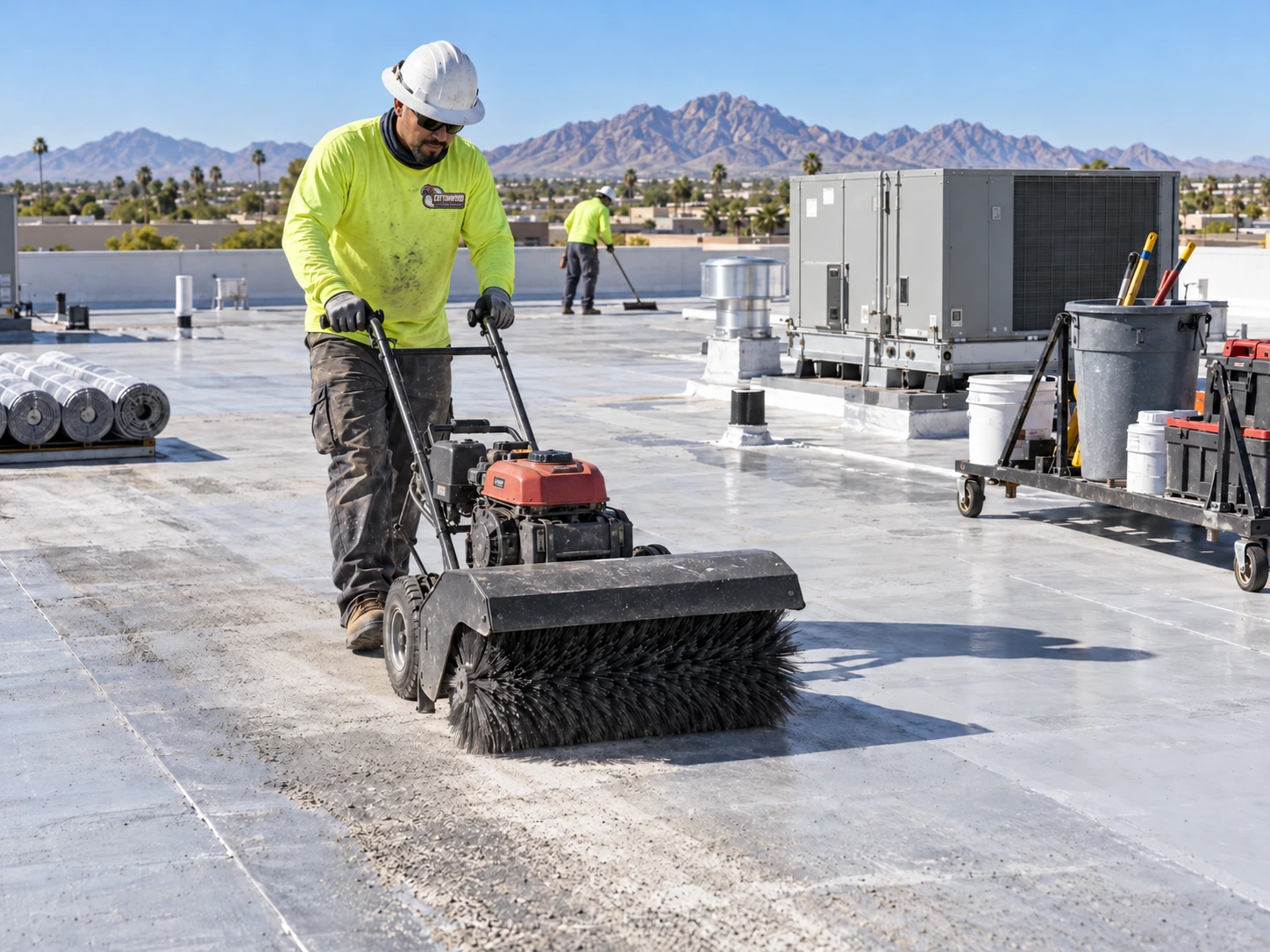
Use a compatible, clean, repair-ready surface as the basis for a coating system rather than treating application as the first step.
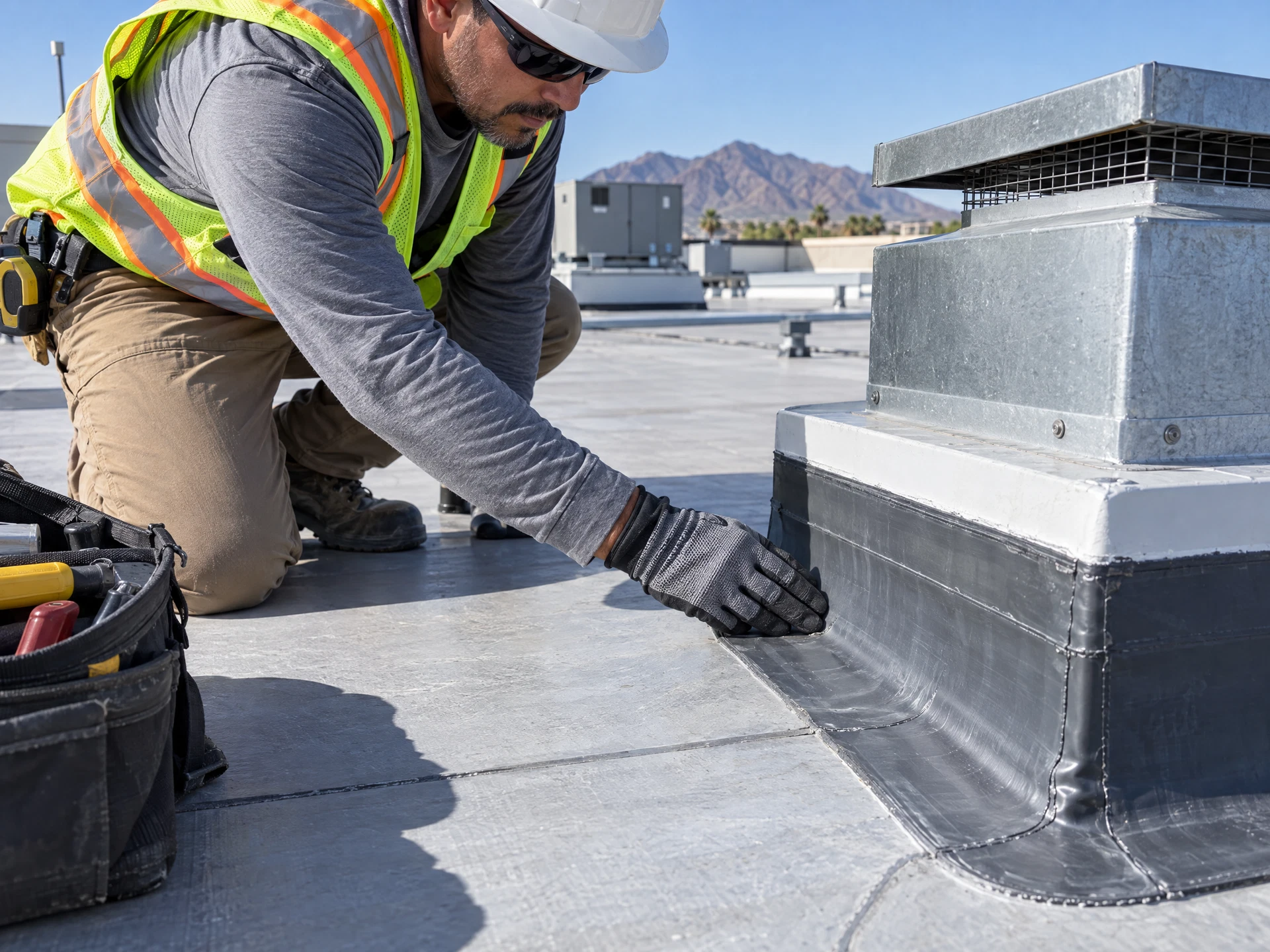
Seams, penetrations, edges, flashings, fasteners, and rooftop transitions require attention because details can control the scope.
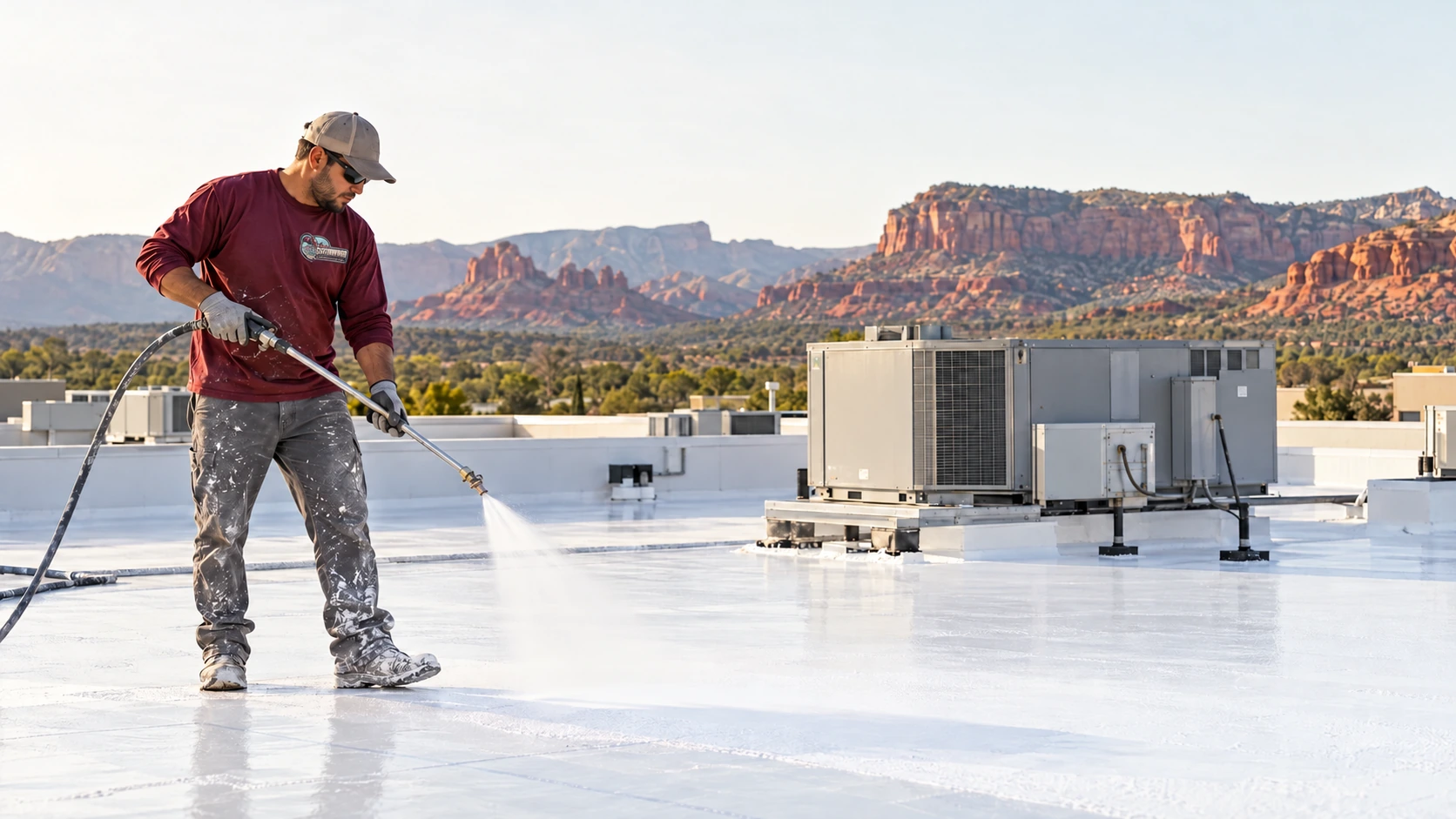
Access, rooftop equipment, occupied areas, staging, and schedule constraints should be planned before work begins.
Commercial only. The work concerns commercial property roof systems, building access, repair boundaries, preparation, compatibility, and application conditions.
No unverified license, certification, warranty term, office location, staffing detail, project history, or review should be assumed.
It provides a preliminary comparison between coating/restoration and replacement using fixed planning inputs. It is not a quote, inspection, final scope, appointment confirmation, or work agreement.
The roof condition should guide the next step. Repair, further evaluation, or a different roofing solution may be needed before a coating system is appropriate.
Commercial Roof Planning
Start with the roof conditions and building needs in front of you. The estimate path provides a preliminary planning range, while a call lets you discuss the commercial property directly.