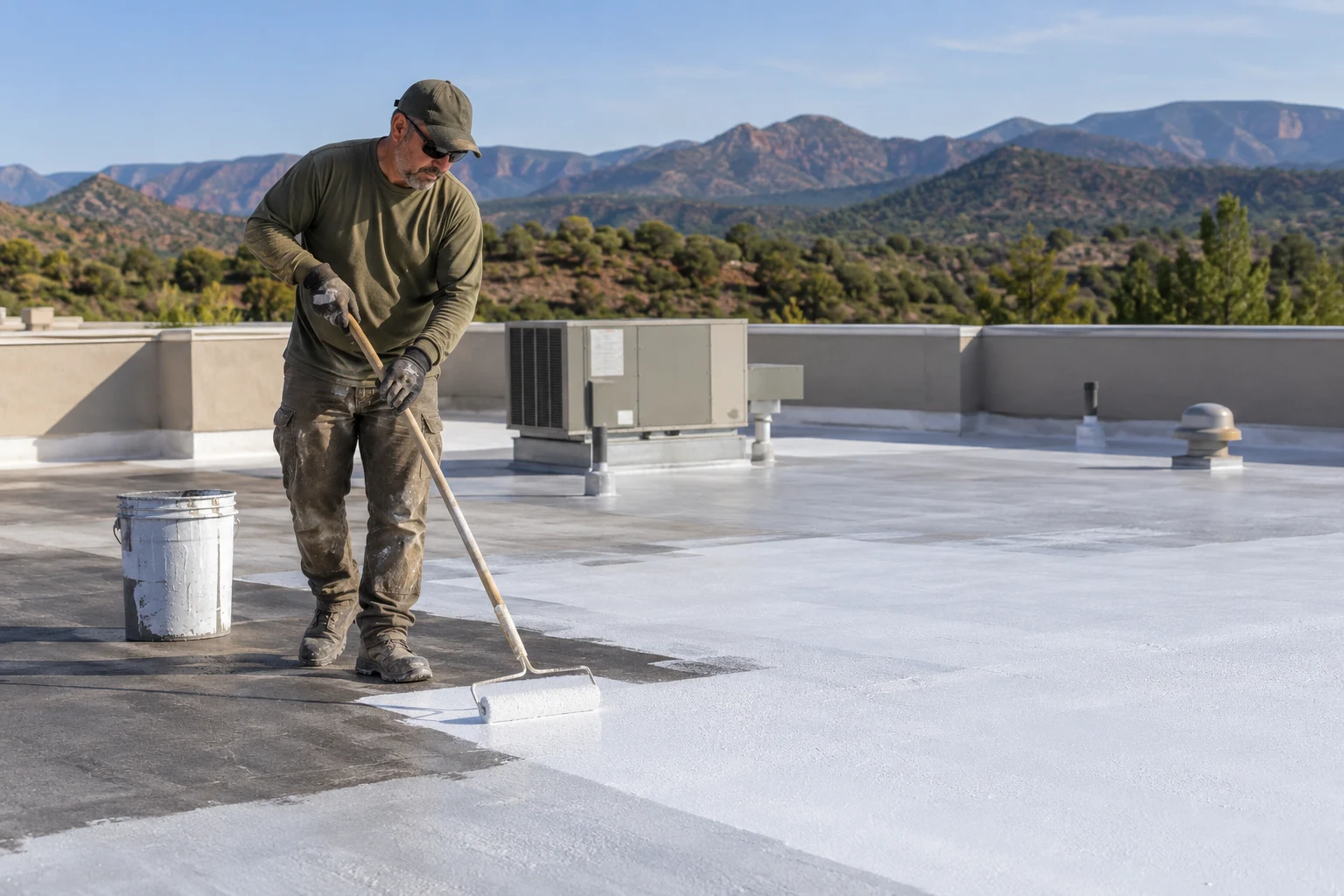
Understand What The System Provides
Spray polyurethane foam forms an insulating roof layer over a suitable prepared substrate. Its protective coating shields the foam from exposure. The two elements must be considered together when specifying new work or restoring an existing foam roof.
Foam is not a universal covering for damaged assemblies. The existing roof, attachment, moisture condition and project requirements determine whether the approach is suitable.
Prepare The Roof Properly
Wet or deteriorated materials may need removal before installation. Loose surfaces and incompatible materials can also require correction. The assessment should establish these conditions instead of treating the sprayed application as a way to conceal them.
For an existing foam roof, damaged foam and coating deterioration need separate review. Renewing the finish is useful only where the material beneath it remains suitable or is properly repaired.
Plan The Shape And Details
Drainage, curbs, penetrations and roof edges need a defined plan. A sprayed layer does not automatically solve every low area. Finished elevations and outlet relationships must fit the intended assembly.
Application planning also includes nearby property and equipment. Discuss access and surrounding operations so work-area controls can be included in the project scope.
Benefits of Coating Your Roof
Recoating a suitable existing foam roof may preserve the foam layer, reduce tear-off waste and allow a smaller restoration project. Repair needs and moisture findings determine the actual extent.
Foam can contribute insulation, but performance and financial results depend on the full building assembly. No fixed utility saving is promised by the material choice alone.
Begin With The Existing Condition
Let us know whether the property already has foam roofing and what issue prompted the request. We can discuss the inspection needed to establish preparation, repairs and the protective coating requirements.